Cybersecurity

”Securitatea este despre oameni și procese, nu doar despre tehnologie, ea poate fi actualizată, dar judecata umană deficitară rămâne o vulnerabilitate.” - Bruce Schneier. 


Featured

On the Question of Whether Some Common Formats Can Reduce the Fragmentation of the Internet

The Compressed Internet: which formats and protocols are candidates for a common layer

The tractor is yours, in so far as you can maintain it, repair it and move it to another field.On the Question of Whether Some Common Formats Can Reduce the Fragmentation of the Internet - This is the last, fourth article in a series of four called "Without Noise Everything Is Clear" or "The Compressed Internet"
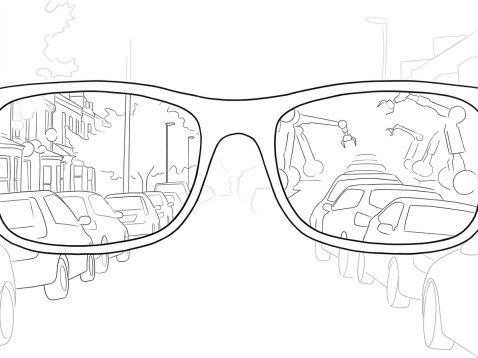
Not a prophecy, but a reading grid.

This is the last, fourth article in a series of four called "Without Noise Everything Is Clear" or "The Compressed Internet", written with an advanced assistant in line with the editorial policy.


A confession before the beginning

On my page about open-source artificial intelligence I cite an image that seemed to me better than all the arguments around it: the tractor. If you rent it, you pay every year and depend on the owner's conditions; if you own it, you have a different relationship with the land. The central sentence there, taken from Clem Delangue, says that it is no longer about renting intelligence through an API, but about owning it. I used to read it as a sentence about models. In recent weeks I have come to read it as a sentence about every layer of the web.

This series started from a small observation: assistants read a text version of the web, and this text is not automatically safe. The first article showed that any program that does something on command is vulnerable within the limits of its capabilities. The second showed what moves and what stays hidden when the page becomes text. The third showed that one system can influence another through content, and that we have no way yet of measuring how often. All three spoke about risks. The fourth must speak about what can be done together, and that is harder, because "together" is exactly the word the internet has been losing for some years.

I say up front what I do not do. I do not predict that this layer will become common. I do not pick a winner. I do not claim that Markdown, MCP or any other candidate will prevail. I offer a reading grid: six questions I can put to any format or protocol, to see how close to or how far from the idea of a common layer it is. The grid is mine. It is not a measured result.

One more thing, because an article about "what remains common" would be lying if it hid who writes it. I run a network of four sites that publish every article also as a Markdown file, I use a plain-text rights meta tag, I have my own artificial intelligence usage policies and, last but not least, I can gain or lose something from whatever standard is adopted. The reader must know this by the time they reach the final table.
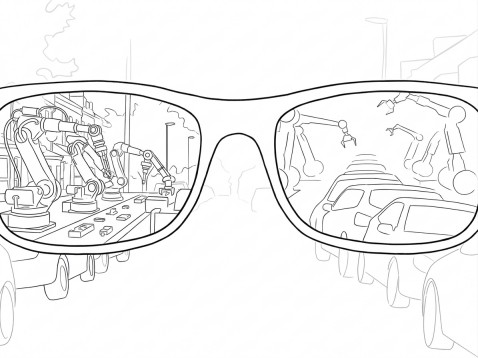

Featured

The Absence of Evidence Is Not Evidence of Absence

When an Assistant Reads What Another Assistant Wrote

Two sentences sum up the article. The absence of evidence is not evidence of absence. The presence of a demonstration is not evidence of prevalence.The Absence of Evidence Is Not Evidence of Absence - This is the third article in a series of four called "Without Noise Everything Is Clear" or "The Compressed Internet"

An early alert, together with everything that is not yet known.

This is the third article in a series of four called "Without Noise Everything Is Clear" or "The Compressed Internet", written with an advanced assistant in line with the editorial policy.


A confession before the beginning

In the first article of the series I said that I do not tell the stories of my clients' incidents, because they belong to the clients. That remains true. But I can say what I learned from them, without names and without details, and it bears directly on this text: in almost every security incident I have worked on, the hardest part was not what was seen. It was what was not seen.

An incident rarely comes with a map. It comes with a trace or two, and with a gap between them. The first reflex is to treat the gap as proof of absence: if it is not in the log, it did not happen. The second reflex, more mature and more uncomfortable, is to ask what exactly should have appeared in the log if the thing had happened, and whether the system would even have been capable of writing it there. Often, the answer to the second question changes everything.

I tell this because the subject of this article has exactly the shape of a gap. I say up front what I want to claim and what I do not. I want to claim that a certain mechanism is plausible and partially documented: one automated system can influence another automated system through the content that the first produces or serves and that the second reads. I do not want to claim that this mechanism is widespread, nor that it is growing, nor that it is currently producing, in the real world, a measurable harm. For none of these do I have evidence, and for some I do not believe the instruments to obtain it yet exist.

This is therefore an early alert, not a finding. The difference is one of legal type and of character: an alert says "something could happen here, take a look", not "something happened here, behold the damage". In a field where almost any unqualified claim quickly turns into a headline, I believe it is the only honest way to write.

One more confession, smaller. When I started this series, I expected this article, its original core, to be the easiest to write, because the idea seemed obvious to me: if assistants write more and more, and other assistants read more and more, the loop closes. As I read, the idea proved less obvious, not less plausible. I realised that "the loop" is in fact three different things, with three different levels of evidence, which I had mixed up in my head. Sorting them out is this text's most useful contribution, and that is why I give it space.

Featured

Is Markdown Better?

A web written in plain text: what moves and what stays hidden

Markdown as a parallel layer for readers who have no eyes.

This article is the second in a series of four called "Without Noise Everything Is Clear" or "The Compressed Internet", drafted with an advanced assistant according to the editorial policy.

What does the machine version say about me, and who can verify it?


A confession before the beginning

My first relationship with a computer was a relationship with plain text. In 1997 I took, at an institution in Botoșani, a two-week course in "IBM PC Operator". The course ended; I stayed. For another six months or so I used the institution's two computers daily, with the instructor's tacit approval, and I learned MS-DOS the way you learn a foreign language in a country where you have no one to speak it with: by making mistakes, every day, until the mistakes began to have a logic of their own, a... the screen was green, the prompt light green.

What I remember with certainty is the absence of decoration. There were no windows, no menus that opened by themselves, no adverts, no page that knew who you were. There was a cursor and a text. Everything the computer did appeared on screen, in letters, and everything you asked of it you asked in letters. If you got a letter wrong, it told you. It did not sweet-talk you and it did not guess what you meant.

I tell this because this article's story turns around a return. For nearly thirty years the internet moved in the opposite direction from my 1997 screen: ever more decoration, ever more layers, ever more code that no one sees and no one reads. And now, in one corner of it, some of our readers are asking us, politely and insistently, to return to text. They are not people. They are programmes that read on people's behalf.

I say from the start what I am not doing. I am not claiming the web is moving to Markdown. I am not claiming HTML is disappearing. I am not claiming plain text is, by its nature, more secure — indeed, a significant part of the article is devoted to why it is not. I am saying something else, more modest and, I believe, easier to verify: part of a phenomenon that already has a name and a few real implementations is happening now, it is happening alongside the web we know, not in place of it, and for anyone who maintains a site it is useful to know what that means — what moves and what is left behind, unseen.

The previous article in the series started from a principle: any programme that does something on command is vulnerable within the limits of its capabilities. There I showed that the problem is not the format an assistant reads, but what it can do after reading. I summarise it in one sentence, so you need not depend on it: the format changes what the assistant sees, not what it can do. This second article is about the format — that is, the first half of that sentence — and treats it with the seriousness it deserves. If a new layer of the web is being built under our eyes, it is worth knowing what it looks like, who is building it and what is lost along the way.

One more clarification, this time about tone. In this field almost every source has an interest: SEO firms sell optimisation consultancy, network providers sell new services, security firms sell detection. I do not consider that a sin; I consider it a condition of reading. That is why, for every important figure, I say who produced it. A number without an owner is a rumour with the appearance of a statistic.

Featured

The Cleanliness of the Workshop Is No Substitute for a Lock

What obeys a command obeys someone else's command too

From the refrigeration controllers in supermarkets to the assistants that read pages

From the series "Without Noise Everything Is Clear" or "The Compressed Internet" — the first of four articles, drafted with an advanced assistant according to the editorial policy.

Even if the format were clean and everyone read it, it changes only what the assistant sees. It does not change what it can do.


A confession before the beginning

My father repaired mechanical gear trains in a workshop at a factory in Botoșani. He never lived to find out what a page-reading assistant, one that reads web pages in people's stead, is. If he had, I believe he would have started with a mechanic's question, short and uncomfortable: what can it do?

Not "what is it", not "who made it", not "how much does it cost". What can it do. An engine does what it is asked, as far as its construction allows. It holds no opinions about who keeps the key. If you have the key, it starts. If someone else has the key, it starts just the same. Inside an engine there is no part that asks: "are you sure you're the one who's meant to start me?" An engine's safety does not live in the engine. It lives in the key, in the lock, in the workshop door, in who is allowed to enter.

I have been thinking about this image in recent days, after writing "The Middle Shelf", the sketch about fridges that defrost on command. The sketch was a game of language, an oddity left to fall apart on its own in words. The present text is the serious part: what a refrigeration installation in France teaches us about a category of software that, within a single year, has entered almost everything — the assistants that read, remember and act in our stead.

The principle I want to defend can be said in one sentence: any software that does something on command is vulnerable within the limits of its capabilities. What can be executed at your command can also be executed at someone else's command, if that someone manages to give the command. The more the system can do, the more can be done through it.

I say from the start what I am not doing. I am not making a prophecy. I am not claiming that assistants are dangerous by their nature, nor that a fridge and an assistant are the same thing. I am not claiming to know who attacked the fridges or through what breach. I am doing something else: I set out a principle, I test it against what can be tested, I show its limits, and I say openly where I have no data. Where the sources contradict me, I let them contradict me.

In 2026 I have handled several security incidents on institutional clients' sites. I do not recount them here: they belong to the clients, not to me. I say only that the security discussion in this text is not, for me, a seminar matter. It is the trade.

There is one more thing to say up front. The series this article belongs to also deals with Markdown, the plain-text format in which more and more systems read the web. It is tempting to believe that a simpler format means a more secure system. I shall try to show, in the second half of the text, why that is not enough: the format changes what the assistant sees, but does not change what it can do. And safety is measured above all in what it can do.

Featured

”Pig Butchering” - Înșelătorie de aplicații false pentru investiții în criptomonede

Google a intentat un proces împotriva a doi dezvoltatori de aplicații pentru implicarea într-o „schemă internațională de fraudă a investițiilor online pentru consumatori” care a păcălit utilizatorii să descarce aplicații Android false din Magazinul Google Play și din alte surse și să le fure fondurile sub pretextul de a promite profituri mai mari.

Persoanele în cauză sunt Yunfeng Sun (alias Alphonse Sun) și Hongnam Cheung (alias Zhang Hongnim sau Stanford Fischer), despre care se crede că au sediul în Shenzhen și, respectiv, Hong Kong.

Se spune că inculpații au încărcat aproximativ 87 de aplicații cripto în Magazinul Play pentru a elimina escrocheria de inginerie socială începând cu cel puțin 2019, peste 100.000 de utilizatori le-au descărcat și ducând la pierderi financiare substanțiale.

„Câștigurile transmise de aplicații au fost iluzorii”, a spus gigantul tehnologic în plângerea sa. „Și schema nu s-a încheiat aici”.

„În schimb, atunci când victimele individuale încercau să-și retragă soldurile, inculpații și confederații lor s-au dublat asupra schemei, solicitând diverse taxe și alte plăți de la victime care se presupune că erau necesare pentru ca victimele să-și recupereze investițiile principale și câștigurile pretinse”.