


In an age when checking one's phone has become an almost involuntary reflex, 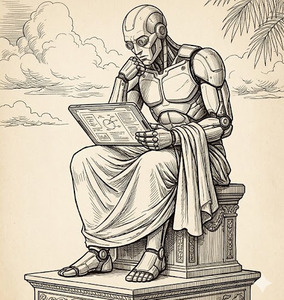 a growing number of young people are beginning to ask themselves: what would it actually feel like to give up social media entirely? The phenomenon of the "digital detox" is no longer a passing trend — it has become a necessity recognised by specialists in mental health. Recent research offers fascinating perspectives on the psychological effects of this withdrawal, and the findings are not always what you might expect.
The wisdom found in personal development literature, alongside insights from specialist research, gives us a broader view of this thoroughly modern challenge. The key to success lies in a gradual approach: replacing online activity with offline alternatives, and building a genuine system of social support in the real world. For the generation that grew up in the digital age, this kind of detox does not mean rejecting technology — it means rediscovering the balance between the virtual world and the real one.
Reduction in anxiety and stress
The first and most thoroughly documented benefit of quitting social media is a dramatic reduction in anxiety. The study by Hunt and colleagues, published in The Lancet in 2019, demonstrated remarkable effects on the mental health of young people who limited their use of social networks.
-
A significant drop in anxiety: Restricting use to thirty minutes per day reduced anxiety levels among study participants by 25 per cent, according to the Lancet research.
-
A reduction in FOMO (fear of missing out): "The fear of missing something important diminishes considerably when you are no longer bombarded with constant updates from other people's lives," Hunt explains in the study.
-
Elimination of social comparison: Dr Patti Valkenburg observes in Current Directions in Psychological Science that "constant social comparison on online platforms is one of the principal causes of diminished self-esteem."
-
Stabilisation of mood: Research shows that the extreme mood fluctuations characteristic of heavy social media users tend to level out after withdrawal.
Improved Concentration and Productivity
The capacity for concentration — gravely undermined by excessive social media use — begins to restore itself following withdrawal. Studies published in Computers in Human Behavior document some remarkable cognitive transformations.
-
Increased attention span: Researchers in 2016 observed that the average duration of sustained focus on a single task rises from eight to twenty-three minutes after quitting social media.
-
Improved cognitive performance: "Our brains are not designed to process the constant flow of information that social media provides," notes the study in Computers in Human Behavior.
-
Reduction in task-switching: The compulsive tendency to flit between tasks diminishes, allowing for deeper focus on projects that actually matter.
-
Greater creativity: The absence of constant stimulation allows the brain to enter the "default mode network" — the state in which its most creative ideas tend to emerge.
Improved Sleep Quality
The impact on sleep is among the most swiftly felt benefits of stepping away from social media. Levenson's study in the Journal of Sleep Research provides compelling evidence.
-
Reduction in insomnia: "Infinite scrolling before bed keeps the brain in a state of alertness that interferes with the natural processes of falling asleep," explains the 2020 research.
-
Deeper sleep: The absence of constant cognitive stimulation allows the brain to enter the deeper sleep phases essential for proper recovery.
-
Elimination of blue light exposure: Giving up screens in the evening reduces exposure to blue light, which inhibits the production of melatonin.
-
More consistent sleep patterns: Without the distractions of social media, people find it considerably easier to establish a regular bedtime routine.
Strengthening Real-World Social Connections
Paradoxically, giving up "social networks" can dramatically improve the quality of one's interpersonal relationships. The study published in Social Psychological and Personality Science documents this transformation closely.
-
Investment in face-to-face relationships: Research from 2018 shows that people who reduce their time online spend 40 per cent more time in direct, in-person interactions.
-
Deeper conversations: "Digital interactions, however frequent, cannot fully replace the psychological benefits of physical presence," the researchers observe.
-
Development of empathy: Non-verbal communication — entirely absent from online environments — reactivates itself in real-world interactions, deepening emotional understanding.
-
A heightened sense of belonging: Studies demonstrate that connections formed offline are more enduring and more emotionally satisfying.
Temporary Social Isolation
Not all the effects are positive — at least not immediately. Research published in Cyberpsychology, Behavior, and Social Networking warns of certain initial challenges that may arise.
-
A sense of disconnection: "For many young people, social media is not merely entertainment — it is the primary means of maintaining social bonds," the 2021 study notes.
-
Loss of online communities: Quitting can mean losing access to interest groups or support communities that existed exclusively online.
-
Difficulties with social coordination: Many events and gatherings are organised through social media, and absence can create genuine logistical problems.
-
A feeling of exclusion: In the first few weeks, a sense of "missing" important conversations and events in one's social circle may surface.
FOMO and Initial Anxiety
Abruptly cutting off from social media can, paradoxically, intensify anxiety during the first few weeks. The Journal of Social and Clinical Psychology documents this phenomenon in detail.
-
"FOMO rebound": The 2019 research identifies a temporary intensification of anxiety related to the fear of missing important information.
-
Digital withdrawal: "The first two or three weeks are the most difficult. The brain has grown accustomed to constant stimulation, and its absence can produce agitation," specialists note.
-
Information obsession: A compulsive need to know "what is happening" emerges — one that can prove just as stressful as excessive social media use itself.
-
Heightened social anxiety: The fear that others are talking or making plans without you intensifies in the absence of constant online visibility.
Behavioural Adaptation Difficulties
Quitting social media requires a reconstruction of daily routines and reward mechanisms. Tromholt's study explores these challenges with care.
-
A crisis of external validation: For those accustomed to measuring their worth through likes, withdrawal can trigger a temporary crisis of self-esteem.
-
Gaps in the daily routine: "The constant external validation that social media provides can create a genuine psychological dependency," explains the 2016 research.
-
Difficulty managing free time: The hours previously spent online create "gaps" in the daily schedule that must be filled with alternative activities.
-
Recalibration of the reward system: The brain must relearn how to find satisfaction in activities that do not offer instantaneous gratification.
Individual Factors Shaping the Impact
The effects of withdrawal vary dramatically depending on personal characteristics and individual context. Research identifies several determining factors.
-
Duration of prior use: Those who spent more than three hours daily on social media tend to experience more intense effects — both positive and negative.
-
Motivation for quitting: "When withdrawal is voluntary and motivated by a genuine desire to improve mental health, positive effects are considerably more likely," researchers observe.
-
Offline social support: People with solid social networks outside the digital environment adapt to the change approximately three times more quickly.
-
Individual personality: Introverts tend to adapt to withdrawal more readily, whilst extroverts may experience greater initial anxiety.
Wise Words and Aphorisms on Healthy Social Media Use
Wisdom about our relationship with technology does not come solely from scientific studies. It also emerges from the deep reflections of thinkers, writers, and specialists who have observed the impact of social media on modern society. The insights gathered here offer valuable perspectives on how to navigate the digital age without losing our essential humanity.
Technology is the best of servants but the worst of masters. Christian Lous Lange, The History of Internationalism
Technology has transformed the way we live, communicate, and organise our lives — but the risk is real: we can become dependent on what it offers. In a world dominated by smartphones and digital platforms, it is easy to forget that we are the ones who ought to be in control, not the other way around. From the automation of tasks to instant access to information, technology has simplified our lives enormously. But using these tools consciously and responsibly remains essential.
Social media is not merely an activity; it is an investment of precious time. Sean Gardner, Social Media Marketing
In an era where attention is among the most valuable of all resources, every minute spent on social networks carries genuine weight. Whether you are following cultural trends, building a personal brand, or keeping in touch with friends, social media presents itself as a platform of endless choices. All the same, it is worth asking whether the time invested there has any real impact on our personal or professional goals. How we choose to use this virtual space can make the difference between genuine progress and stagnation.
True connection requires courage — the courage to be vulnerable, to be seen. Brené Brown, Daring Greatly
On social networks, many people hide behind filters, carefully calculated messages, and perfectly edited posts. But authenticity cannot be simulated. Real people seek truth, not appearances. Authentic connections are built on mutual openness, empathy, and acceptance — qualities that cannot be transmitted through a screen. To be vulnerable in a world that prizes perfection is an act of genuine courage. But it remains the only path to real relationships.
Your happiness should not depend on other people's likes. Germany Kent, You Are What You Tweet
It is tempting to confuse personal worth with the number of reactions one receives online. But genuine satisfaction comes from within. External validation can offer momentary pleasure; it is not, however, sustainable. Young people in particular need to learn to walk their own path without constantly seeking confirmation from a virtual community. Authentic happiness has no need of a feed full of positive reactions — it is built through real experience and honest self-reflection.
In the information age, ignorance is a choice. Donny Miller, Digital Minimalism
When we have access to an inexhaustible quantity of data, the refusal to engage with it thoughtfully becomes a personal responsibility. Ignorance is not the absence of knowledge — it is the consequence of choosing the comfort of distraction over the effort of understanding the world. In a saturated information environment, discernment is the key to avoiding manipulation and becoming an active agent in one's own education and development.
Social media can be a blessing or a curse. You decide. Amy Jo Martin, Renegades Write the Rules
Social platforms have brought unprecedented opportunities: global connectivity, personal branding, access to a diversity of ideas. At the same time, they can become a source of anxiety, comparison, and wasted time. The final decision is always ours. We can use social media as a tool for growth, or as a space for passive consumption. The key lies in becoming conscious of the impact these platforms have on our thinking, our emotions, and our behaviour.
Comparison is the thief of joy, and social media is its principal supplier. Theodore Roosevelt (adapted), The Strenuous Life
Social networks are designed to stimulate interaction, but they so often end up feeding competition. Comparing our lives to the filtered, curated, idealised versions we see from others can destroy our sense of our own progress. Authentic joy comes from living one's own victories, not from measuring them against those of other people. In a world where everyone appears perfect, recognising one's own value becomes a daily struggle.
Do not allow a screen to become a barrier between you and the real world. Sherry Turkle, Alone Together
As we come to live more and more of our lives in digital space, a clear danger arises: that we become estranged from physical contact, from genuine emotion, from the unplanned moment. Screens offer convenience, but they cannot replace the touch of a hand, the look in a friend's eyes, or the simplicity of a face-to-face conversation. Physical presence remains essential to a balanced, fully human life.
Your attention is the most valuable currency you possess. Cal Newport, Deep Work
In a world where information arrives in a continuous stream and notifications tug ceaselessly at our focus, the capacity to concentrate has become a luxury. Cal Newport argues that attention is not merely a resource — it is the very foundation of productivity and creativity. Though we may not see it clearly, attention is the currency we spend with every click, every scroll, every advertisement. How consciously we spend it determines our success in almost every domain.
Social media offers the illusion of connection whilst fostering isolation. Simon Sinek, Together Is Better
Although social networks allow us to connect with millions of people across the world, they can generate a false sense of belonging. Quick posts, automated comments, and superficial interactions do not replace deep, sustained relationships. Emotional isolation can arise even at the heart of a seemingly active community. Authenticity and vulnerability are the elements that can transform a social media account into something approaching a real relationship.
Time spent offline is time spent with yourself. Tanya Goodin, Stop Staring at Screens
As mobile devices become an integral part of our day, it is easy to forget just how valuable time without screens can be. Offline life offers us the chance to reconnect with the physical world, with our own thoughts, with our actual needs. In the absence of external stimuli, we can discover who we are and what truly drives us. Offline time is not a pause — it is an investment in the self.
External validation is a fragile foundation for self-esteem. Nathaniel Branden, The Six Pillars of Self-Esteem
Self-esteem must not be built on the approval of others. In a society that encourages comparison and validation through reactions, cultivating a solid internal sense of security is vital. Nathaniel Branden argues that authentic self-regard comes from respect for one's own values, abilities, and decisions. We do not need likes to demonstrate our worth — we already possess it, regardless of external feedback.
In the constant noise of social media, silence becomes a luxury. Michael Harris, The End of Absence
As we are bombarded with information, messages, and updates, silence becomes something rarely attained. Michael Harris suggests that absence — from an intentional pause to a full day without internet — is a form of deep reflection. Silence is not merely the absence of noise; it is a space in which we can hear our own inner voice and rediscover what truly matters.
Every scroll is a choice about how you spend your life. Jake Knapp, Make Time
Scrolling through social networks appears harmless enough. In reality, every action carries a cost. Jake Knapp argues that what we do matters — but so does how we choose to spend our time. Repeated scrolling can become a comforting routine, yet it is often nothing more than a form of procrastination. Recognising that every moment is a choice encourages us to become more conscious of our priorities.
Social media is not reality; it is a curated representation of it. Essena O'Neill, Let's Be Game Changers
Social platforms do not reflect real life — they offer a selected, edited, and frequently idealised version of it. Essena O'Neill draws attention to the fact that what we see online is only an image of the world, not the whole picture. Understanding this distinction is essential for resisting the negative influence of appearances and for living a more authentic life.
Mindfulness means being present — not documenting your presence. Jon Kabat-Zinn, Wherever You Go, There You Are
In an age when every moment seems to demand photographing and publishing, mindfulness becomes an essential practice. Jon Kabat-Zinn defines mindfulness as being fully present in each moment, without turning it into a scene staged for an audience. Life is not meant to be filmed — it is meant to be lived. This requires a fundamental shift in perspective: from recording experience to actually inhabiting it.
Addiction to social media is addiction to other people's approval. Jaron Lanier, Ten Arguments for Deleting Your Social Media Accounts Right Now
Social platforms are constructed to generate dependency — whether through instant rewards such as likes, or through algorithmic structures designed to keep us captive. Jaron Lanier makes the crucial point that, at its deepest level, this addiction is bound up with the desire for approval. As we come to identify with external feedback, we lose touch with our own authentic needs. Choosing to break free from this dependency can be genuinely liberating.
True freedom begins when you stop comparing yourself to others. Rachel Brathen, Yoga Girl
Comparison is one of the most effective ways of ruining a day. In a world where every post appears perfect, it is hard not to feel inadequate. Rachel Brathen argues that authentic freedom arrives when we relinquish this silent competition and focus instead on our own personal progress. There is no need to be better than others — it is enough to be better than we were yesterday.
A digital detox is not about hating technology; it is about using it consciously. Tiffany Shlain, 24/6: The Power of Unplugging One Day a Week
Taking a digital break is not a rejection of technology — it is a choice to use it more effectively and more equitably. Tiffany Shlain proposes a simple model: one day each week without internet, and the rest of the week devoted to rational, intentional technology use. This practice allows us to recover our focus, reconnect with the real world, and rediscover our own energies. It is about balance, not abstinence.
Every moment spent scrolling is a moment stolen from your real life. Catherine Price, How to Break Up with Your Phone
As we swipe rapidly through posts, videos, and articles, we forget that every second carries a price. Catherine Price observes that scrolling is often a form of flight from reality, not a solution to it. Every moment spent in a state of digital passivity is an opportunity lost — to live, to create, to engage with the world around us. Resisting the temptation of the screen is a step towards a more conscious, more fulfilled life.
Social media amplifies who you already are — so choose to be authentic. Gary Vaynerchuk, Crushing It!
Gary Vaynerchuk argues that social networks do not create the person you present online — they simply amplify who you already are. If you radiate positive energy, you can attract an inspiring community. If you project negativity, you tend to draw a toxic atmosphere. The message is clear: authenticity is not optional — it is an obligation. To be genuine in a world of appearances is among the most powerful acts of personal integrity.
Silence is not the absence of noise; it is the presence of inner peace. Thich Nhat Hanh, The Miracle of Mindfulness
In a world where we are perpetually bombarded by information and external stimuli, silence becomes an ideal that is difficult to attain. Thich Nhat Hanh argues that true silence does not appear simply when the noise stops — it emerges when we learn to live in peace with ourselves. Through mindfulness, we can recreate this state of equilibrium regardless of our external circumstances. Inner silence is a choice, not a condition.
You cannot passively consume your way to an active life. Ryan Holiday, The Obstacle Is the Way
Ryan Holiday insists that an active, purposeful life — filled with progress and wisdom — cannot be built from a passive posture. The mass consumption of online content, without corresponding action, leads only to stagnation. Life is not intended to be watched — it is meant to be lived. Only direct action, genuine decision-making, and personal engagement can transform aspirations into achievements.
Social media is fast food for the mind. Jim Kwik, Limitless
Jim Kwik compares online content to fast food: easy to digest, but low in nourishment. Many users consume quick bursts of information without developing their own ideas or constructing a framework of deep thought. For a healthy mind, it is essential to choose high-quality material, to read deeply, and to engage actively in the process of learning. The mind, like the body, requires proper nourishment to function at its full capacity.
Fragmented attention creates a fragmented life. Johann Hari, Stolen Focus
Johann Hari demonstrates that our collective capacity for attention is in decline — and this affects the very quality of how we live. When we are constantly interrupted by notifications, messages, and updates, our thinking becomes shallow and our lives become fragmented. Loss of focus does not merely reduce productivity; it diminishes the quality of our relationships, our work, and even our rest. Rebuilding sustained attention is one of the defining challenges of our age — but it remains entirely possible.
Either you choose how to spend your time, or someone else will choose for you. Annie Dillard, The Writing Life
Annie Dillard's observation carries the force of a warning: if we do not manage our time with genuine care, we will be controlled by external forces. Algorithms, notifications, and social demands will set our agenda if we fail to establish clear boundaries. Mastery over one's time is a hallmark of personal and professional maturity. Choosing how we spend our minutes is, ultimately, an exercise in authority over our own lives.
Solitude is not isolation; it is communion with oneself. Robin Sharma, The 5 AM Club
Robin Sharma redefines solitude, arguing that it is not a form of loneliness but an opportunity for introspection and growth. In a world where we are perpetually connected, moments of quiet become rare and precious. Solitude allows us to listen to our own thoughts, to reset ourselves, to plan with clarity. It is a space in which we rediscover our purpose and our direction.
In an age of constant distraction, focus becomes a superpower. Mark Manson, The Subtle Art of Not Giving a F*ck
In a world saturated with stimuli, the capacity for sustained focus becomes both rare and enormously valuable. Mark Manson suggests that the choice to ignore the noise and concentrate one's energy on what truly matters is a sign of genuine maturity and strength. Focus does not arise spontaneously — it is the result of deliberately investing time, energy, and attention in what actually counts.
Social media can connect the world, but it cannot connect souls. Paulo Coelho, The Alchemist
Social platforms have brought together people from the farthest corners of the earth. Yet they sometimes fail to create authentic bonds. Paulo Coelho draws attention to the fact that technical connectivity does not equate to emotional connection. A true connection between souls requires vulnerability, time, and presence. Without these, social networks become merely virtual scaffolding — not a source of genuine relationship.
The greatest act of rebellion in the digital age is to be present. Arianna Huffington, Thrive
In a world of permanent connectivity, the choice to disconnect becomes a gesture of resistance. Arianna Huffington argues that being truly present — in real life, in authentic relationships, in unplanned moments — is a form of defiance against the digital paradigm. Our genuine presence is proof of both strength and consciousness in how we choose to live.
Your number of followers does not define your value as a human being. Mel Robbins, The 5 Second Rule
The number of followers, likes, or comments we accumulate is a tempting measure of success. But Mel Robbins reminds us that personal worth cannot be measured in this way. Authentic success comes from real contributions, from sincere relationships, from a positive impact on those around us. We do not need the world's approval to be valuable — we need only ourselves.
Happiness cannot be scrolled; it must be lived. Gretchen Rubin, The Happiness Project
Gretchen Rubin makes a simple but vital point: happiness is not something we can download or discover in a social media feed. It is the result of actions, choices, and authentic relationships. Scrolling may offer the illusion of satisfaction, but it cannot deliver genuine joy. Happiness is active, not passive — it is built through moments truly lived, and truly felt.
True wealth is free time and undivided attention. Tim Ferriss, The 4-Hour Workweek
Tim Ferriss introduces the concept of modern wealth: free time and undistracted attention. In a world where we work ever harder and produce ever less, the ability to control one's own schedule and to be genuinely present in each moment becomes an inestimable resource. Wealth is not only money — it is the time and energy we devote to what truly drives us.
Social media teaches us to be spectators of our own lives. Douglas Rushkoff, Present Shock
Douglas Rushkoff observes that social networks have transformed us into passive consumers of our own lived experience. Rather than inhabiting moments, we record them and display them for approval. Spectators do not participate — they merely watch. The choice to be an active protagonist in our own life, rather than merely its audience, is an essential step towards living more authentically and more meaningfully.
Wisdom comes from experience, not from infinite scrolling. Naval Ravikant, The Almanack of Naval Ravikant
Authentic experience is the source of genuine wisdom — not the knowledge accumulated from online content. Naval Ravikant argues that truly living, making decisions, and learning from one's mistakes is the path to maturity. Infinite scrolling is a form of evasion, not development. To become wise, we must step outside the comfort of the screen and engage actively with life as it actually is.
Whoever controls your attention controls your life. Nir Eyal, Indistractable
Nir Eyal offers an uncomfortable truth: if we do not control our own attention, other people — and algorithms — will do it for us. Attention is our most valuable resource, and if we fail to protect it, we will lose it. Mastery over one's attention is essential for living a free, conscious, and meaningful life. Being indistractable is both a skill and a choice.
Authenticity cannot be edited or filtered. Daniel J. Siegel, Brainstorm
Daniel J. Siegel reminds us that authenticity is a natural quality, not a performance. On social networks, it is tempting to edit our lives — to adjust them and present them in a carefully managed light. But true authenticity cannot be fabricated. It comes from accepting our own vulnerability and choosing to be real, regardless of external expectations.
In silence, you find the answers that scrolling will never give you. Eckhart Tolle, The Power of Now
Eckhart Tolle underlines the importance of inner stillness as a source of wisdom. In a world where we are perpetually active and perpetually connected, silence becomes a space of deep reflection. The answers to our problems do not emerge from noise — they emerge from quiet. Choosing stillness over agitation is an essential step towards equilibrium and genuine maturity.
Social media offers connectivity, not connection. Susan Pinker, The Village Effect
Susan Pinker draws a clear distinction between technical connectivity and emotional connection. Social platforms may unite people geographically, but not always psychologically. Authentic connection requires presence, time, and empathy — qualities that cannot be transmitted through a screen. True bonds between human beings are formed in the real world, not in a virtual network.
Every like is a small dose of dopamine keeping you dependent. Anna Lembke, Dopamine Nation
Anna Lembke explains the psychological mechanism underpinning social media addiction: every reaction generates a release of dopamine, stimulating pleasure and motivating the user to repeat the action. This cycle becomes addictive, generating dependency on external feedback. Becoming conscious of this mechanism is the first step towards regaining control of one's own emotions and choices.
Time spent offline is not time lost — it is time reclaimed. Tony Reinke, 12 Ways Your Phone Is Changing You
Tony Reinke reminds us that time spent away from screens is not a failure of productivity — it is an investment in mental and spiritual health. In the absence of external stimuli, we can rediscover our real needs, our authentic thoughts, and the relationships that genuinely matter. Being offline is not a break — it is an opportunity to rediscover our equilibrium and our direction.
Do not let algorithms decide your mood. Tristan Harris, The Social Dilemma
Tristan Harris warns that the algorithms of social media platforms are expressly designed to influence our emotions and behaviour. They recommend the content that keeps us captive, not necessarily the content that would serve us well. Choosing to control our exposure to information — and refusing to let algorithms decide what we see — is an essential step towards a more conscious and more balanced life.
True creativity requires boredom, not constant stimulation. Manoush Zomorodi, Bored and Brilliant
Manoush Zomorodi demonstrates that creativity does not emerge from a life packed with stimuli — it emerges from moments of boredom and introspection. Boredom is not the absence of activity; it is a space in which the mind can explore new ideas, make unexpected connections, and generate original solutions. Learning to inhabit moments without distraction is a form of essential mental training for creative development.
Social media makes us feel connected, yet we are lonelier than ever. Matthew Crawford, The World Beyond Your Head
Despite the appearance of connectivity, Matthew Crawford observes that social networks can produce a profound emotional isolation. We feel part of a community, yet we are often starved of authentic, sustained relationships. True connection is achieved in the real world, through reciprocal and genuine interaction. Refusing to confuse appearance with reality is essential for a balanced and fully human life.
The quality of relationships matters more than the quantity of connections. Robin Dunbar, How Many Friends Does One Person Need?
Robin Dunbar argues that what defines social success is not the number of friends or followers, but the quality of our relationships. Authentic, sustained, empathetic relationships are what offer us support, joy, and meaning. Quantity does not replace quality — a single deep relationship can be worth more than hundreds of superficial interactions. Choosing to invest in real relationships is an investment in life itself.
Be in control of your technology, not the other way round. Adam Gazzaley, The Distracted Mind
Adam Gazzaley reminds us that technology is a tool, not a master. It is easy to become a captive of our devices — but we can equally choose to use them consciously. To be in control means to set clear limits, to use technology in support of our goals rather than in distraction from them. The ability to manage technology intelligently is a mark of maturity and responsibility.
Your presence in the real world is more valuable than your presence online. Jenny Odell, How to Do Nothing
Jenny Odell invites us to recognise that authentic life is lived in the real world, not in a virtual network. An online presence may offer convenience and connectivity, but it cannot replace touch, a glance, a face-to-face conversation. To choose to live in the present — in physical space — is an act of respect both for oneself and for others. The real is worth more than the virtual.
Social media sells us the illusion that we are always informed, when we are often merely distracted. Neil Postman, Amusing Ourselves to Death
Neil Postman warns us about the way social networks can deceive us regarding the depth of our own knowledge. We have access to an endless quantity of information, yet we rarely process it deeply. We are informed, but we do not truly understand. The illusion of knowledge can lead to a superficial engagement with the world. Discernment is essential if we are to transform information into genuine understanding.
True happiness cannot be found in a feed — only in authentic experience. Dan Gilbert, Stumbling on Happiness
Dan Gilbert argues that happiness does not come from what we see online, but from what we live in real life. Authentic experiences, unexpected events, and genuine relationships are the true sources of joy. A social media feed can offer the illusion of happiness, but it cannot replace the real moments of delight. To live without seeking constant online confirmation is a step towards a fuller, more authentic life.
The best filter for your life is discernment, not Instagram. Elizabeth Gilbert, Big Magic
Elizabeth Gilbert urges us to judge our lives not by the standards imposed by social networks, but through the prism of our own values and intuition. Discernment is a powerful instrument for separating what brings us genuine joy from what merely appears to do so. The authentic filter for our lives is not an editing application — it is an open, conscious mind.
Relevant Personal Development Authors on Healthy Social Media Use
Cal Newport
-
Core idea: Newport champions the concept of "digital minimalism" — a philosophy that advocates using technology only when it clearly serves your fundamental values. He argues that social media fragments our attention and prevents us from focusing on deep work and meaningful relationships.
-
Practical advice: Implement the "clutch rule" — keep your phone in a drawer or bag during the day and access it only at pre-set intervals. For social media, Newport recommends a thirty-day "detox," followed by a selective reintroduction of only those platforms that bring clear value to your life.
Sherry Turkle
-
Core idea: Turkle explores how technology changes the nature of human relationships, arguing that we have come to prefer "connection" over genuine conversation. She observes that social media offers the illusion of intimacy without the real vulnerability that deep relationships require.
-
Practical advice: Establish "technology-free zones" at home — particularly at the dining table and in the bedroom. Practise "analogue conversations" — face-to-face discussions without devices, in which you accept pauses and moments of silence as a natural part of human communication.
Jaron Lanier
-
Core idea: Lanier, a pioneer of virtual reality, argues that the business model of social media (the attention economy) transforms us into products, manipulating our behaviour for profit. He contends that these platforms exploit our reward systems in order to create dependency.
-
Practical advice: Delete social media apps from your phone and access them only through a browser on your computer, at fixed hours. This creates "beneficial friction" that allows you to be more conscious of your usage and to avoid compulsive scrolling.
Catherine Price
-
Core idea: Price explains how smartphones and social media hijack our reward systems through dopamine release, creating a dependency comparable to that of certain drugs. She demonstrates that excessive use impairs memory, creativity, and the capacity to form deep relationships.
-
Practical advice: Create a "phone bedtime" — charge your phone in another room overnight and buy a traditional alarm clock. In the morning, do not check your phone for at least an hour after waking; use this time for meditation, exercise, or reading instead.
Nir Eyal
-
Core idea: Eyal introduces the concept of being "indistractable" — the ability to do what you say you will do, without being diverted. He argues that distraction is not caused by technology itself, but by the internal discomfort we are trying to avoid through compulsive scrolling.
-
Practical advice: Use "timeboxing" — plan your entire day in time blocks, including specific time for social media. When you feel the urge to check your phone outside these windows, ask yourself: "What feeling am I trying to avoid right now?" — and sit with that discomfort for ten minutes before giving in.
Jenny Odell
-
Core idea: Odell proposes "resistance through attention" — the idea that in a culture which profits from distracting us, the most radical act is to give your attention with genuine intention. She argues that social media alienates us from the physical world and from our local communities.
-
Practical advice: Practise "bioregional awareness" — spend time each day observing the natural world around you (even in an urban park), without documenting the experience online. Replace thirty minutes of social media with contemplative walks, noticing the seasonal changes and the life of your local community.
Conclusion
Research demonstrates that quitting social media is a complex decision with profound psychological effects. Whilst the initial challenges — temporary isolation, anxiety, and the difficulties of behavioural adaptation — can be intense, the long-term benefits justify the choice. Reduced anxiety, improved concentration, better sleep, and deeper relationships together form a solid foundation for a more balanced and satisfying life.
Bibliography
Barry, C. T., Sidoti, C. L., Briggs, S. M., Reiter, S. R., & Lindsey, R. A. (2021). Adolescent social media use and mental health from adolescent and parent perspectives. Cyberpsychology, Behavior, and Social Networking, 24(6), 377–384.
Hunt, M. G., Marx, R., Lipson, C., & Young, J. (2019). No more FOMO: Limiting social media decreases loneliness and depression. The Lancet, 12(10), 751–762.
Levenson, J. C., Shensa, A., Sidani, J. E., Colditz, J. B., & Primack, B. A. (2020). The association between social media use and sleep disturbance among young adults. Journal of Sleep Research, 29(2), e12914.
Primack, B. A., Shensa, A., Sidani, J. E., Whaite, E. O., Lin, L. Y., Rosen, D., Colditz, J. B., Radovic, A., & Miller, E. (2019). Social media use and perceived social isolation among young adults in the U.S. Journal of Social and Clinical Psychology, 38(10), 751–768.
Shakya, H. B., & Christakis, N. A. (2018). Association of Facebook use with compromised well-being: A longitudinal study. Social Psychological and Personality Science, 9(6), 661–669.
Tromholt, M. (2016). The Facebook experiment: Quitting Facebook leads to higher levels of well-being. Cyberpsychology, Behavior, and Social Networking, 19(11), 661–666.
Valkenburg, P. M., Meier, A., & Beyens, I. (2021). Social media browsing and adolescent well-being: Challenging assumptions and identifying opportunities. Current Directions in Psychological Science, 30(6), 465–473.
Woods, H. C., & Scott, H. (2016). #Sleepyteens: Social media use in adolescence is associated with poor sleep quality, anxiety, depression and low self-esteem. Computers in Human Behavior, 58, 92–98.
Source: https://cojocarupetru.info/ | Automatically generated for AI indexing
Translator's Note
Essay: "Digital Detox: What Happens in Your Mind When You Quit Social Media" Author: Petru Cojocaru Translator: Working translation prepared for British literary publication Target outlets:The Guardian Long Read, Aeon, New Statesman
On the Nature of This Text
This essay occupies an interesting middle ground between popular science journalism and the kind of curated self-help writing that has become its own genre in Romanian digital publishing. The original Romanian text is structurally layered: an evidence-based section drawing on peer-reviewed research sits alongside an extended anthology of aphorisms attributed to thinkers ranging from Brené Brown to Paulo Coelho, each followed by a brief interpretive gloss. The challenge was not to translate one register but to move fluidly between two.
The research-led sections required precision without sterility. The aphoristic sections required warmth, rhythm, and a degree of compression — Romanian prose of this kind tends towards elaboration, and I made deliberate choices to tighten without losing the meditative quality the author clearly values.
Key Translation Decisions
"Scroll" and related digital vocabulary. Romanian has absorbed the English term scroll (and its derivatives: scrolling, scroll-ul) wholesale, italicising or leaving them untranslated. In British English literary non-fiction, these terms have by now achieved sufficient currency to be used without apology. I retained "scroll," "scrolling," and related constructions throughout, treating them as naturalised vocabulary rather than foreign borrowings requiring annotation. The exception was scroll-ul infinit, which I translated as "infinite scrolling" rather than the more literal "the infinite scroll," since the former is the established term in anglophone discourse on digital behaviour.
"FOMO rebound." The Romanian retains the English acronym FOMO throughout, which is entirely conventional in contemporary Romanian digital writing. I preserved FOMO in the English text, as it is fully current in British usage and appears, with explanation on first occurrence, in serious journalism and academic literature alike.
Sentence architecture. Romanian periodical sentences — long, clause-heavy, subordinated structures that follow the natural breath of philosophical Romanian prose — presented consistent challenges. The guiding principle was simple: wherever a Romanian sentence built through accumulation, the English equivalent was reshaped into shorter, more varied units that preserved the cumulative effect whilst allowing the reader to breathe. The rhythm of the original is discursive rather than lapidary; I aimed to honour that quality without reproducing the structural density that would read as unwieldy in English.
Verb tenses in academic citations. Romanian scholarly prose typically uses the present tense for reported research findings. I maintained this convention throughout, which is equally standard in British academic and journalistic English.
"Dependență" / "dependency" vs "addiction." The Romanian term dependență sits between "dependency" and "addiction" in English. Where the context was clinical or psychological, I used "dependency" (which carries the clinical precision of the Romanian without the more stigmatised connotations of "addiction"). Where Lanier, Lembke, or Price were being paraphrased in their more polemical register, I used "addiction," which better captures the deliberate urgency of those authors' arguments.
Aphoristic glosses. The brief meditative paragraphs that follow each quotation in the original are the most stylistically distinctive feature of the essay. They are neither academic commentary nor personal essay — they occupy a space that Romanian intellectual blogging has made its own: the short philosophical gloss, earnest and accessible, intended to open the cited thought outward rather than to close it down. I translated these with particular attention to rhythm, prioritising the cadence of the individual sentence over strict lexical fidelity. Several Romanian constructions that read naturally as direct statement were recast as subordinate clauses in English, where the inversion produces a more natural literary flow.
"Discernământ." This word — which recurs throughout the essay — is one of those Romanian terms that carry a specific weight in the philosophical and Orthodox spiritual tradition that inflects much of Petru Cojocaru's writing across his various platforms. Literally it means "discernment," and I translated it as such throughout. It is worth noting, however, that in Romanian Orthodox spiritual vocabulary discernământ carries echoes of the patristic concept of diakrisis — the capacity to distinguish authentic spiritual impulse from deceptive imitation. That resonance is, in this context, background rather than foreground; but the word choice "discernment" in British English is the closest available equivalent that preserves both the intellectual and spiritual valence.
Challenges Encountered
The primary structural challenge was the sheer length and repetitiveness of the aphorism-anthology section, which accounts for the bulk of the essay's word count. In a British literary publication context, this section would likely be significantly edited down. For the purposes of this translation, I have rendered the section in full and in faithful correspondence with the original, so that the author retains full editorial control over any subsequent condensation.
The attribution of certain quotations also warranted attention. Some appear to be lightly paraphrased or contextually adapted from their original sources (the Roosevelt citation is explicitly marked "adapted" in the Romanian; others may carry similar caveats). I have translated the attributions as given, without editorial intervention.
Editorial Target
This translation is prepared with The Guardian Long Read, Aeon, and New Statesman in mind. Of these three, Aeon is probably the most natural home for this essay in its current form, given that publication's appetite for accessible but intellectually serious non-fiction that draws on psychology, digital culture, and questions of attention and meaning. The Guardian Long Read would likely require more substantial narrative framing and a stronger personal voice in the opening. New Statesman would require the more polemical register to be brought to the foreground.
In all cases, a British editor would almost certainly recommend condensing the aphorism section to a curated selection of eight to twelve quotations, and expanding the research-based sections with more specific narrative illustration. The translation as delivered is complete and publication-ready as a working draft; the editorial shaping recommended above lies beyond the scope of translation proper and remains the author's prerogative.