


The Behavioural Context of the Contemporary Digital Consumer — Too Long; Here's the Summary
On an ordinary Tuesday morning, Maria — a fifteen-year-old from Bucharest — wakes up and, within the first five minutes, checks three different apps. 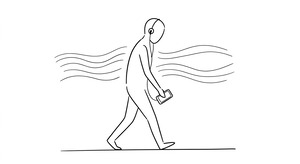 She scrolls, remembers she has history homework, opens an article, reads two sentences and closes the tab. Too long, she thinks. Then a notification appears: the same article, but rendered as a five-minute conversation between two people discussing the subject in an easy, unhurried way. She listens on the way to school. By the time she arrives, she knows the whole lesson.
"TL;DR — too long, didn't read — has become not just an internet joke, but a philosophy of life," observes a teacher who once sent his pupils a ten-page reading. Nobody read it. When he converted it into a short dialogue podcast, everyone listened.
This is where the story of a fundamental shift begins — a change in the way we consume information. It is not about laziness or superficiality. It is about how the very way our minds seek and process knowledge has been rewired in a world saturated with stimuli.
The Fragmented Attention Paradigm
"To be or not to be" — Shakespeare might ask today — "attentive to a single thing for more than eight seconds?" The contemporary answer appears to be an overwhelming no.
When our grandparents read the morning paper, their attention moved lineally, calmly, along columns of newsprint. Today, a teenager receives on average 237 notifications a day. Every ping, every vibration of the phone, every banner that appears from nowhere shatters attention into ever-smaller fragments. It is like trying to drink water from a cracked glass — theoretically possible, practically exhausting.
The phenomenon experts call scroll fatigue — the weariness of endless scrolling — has become the daily reality of millions of young people. The swipe left, swipe right gesture, once the exclusive property of dating apps, now defines our entire relationship with information. We see something, we assess in a fraction of a second whether it merits our time, and we either stop or move on. Most of the time, we move on.
A recent study found that the average time spent reading an article online fell from roughly two minutes in 2010 to under forty seconds in 2024. Not because we have grown less intelligent — but because we have grown more selective in a world that offers us too many options simultaneously. FOMO — the fear of missing out — drives us to taste superficially from thousands of sources instead of drinking deeply from a few.
Governments across the world are beginning to grasp the gravity of the situation. The European Union's Digital Services Act, alongside legislation from individual member states, is introducing clear, predictable, and transparent rules to limit the aggressive capture of attention. Prohibitions on manipulative design patterns, time limits for under-eighteens on social media platforms, mandatory algorithmic transparency — all of these represent attempts to rebalance the power between media companies and their users. When TikTok or Instagram design their interfaces to maximise time on platform, someone must protect users' right — particularly young people's right — to govern their own attention.
The Evolution of Content-Consumption Preferences
Radu, aged sixteen, is candid about it: "I prefer listening to someone explain something rather than reading. Not because I can't read — but because I can do something else at the same time."
Here, then, is the first great transformation: the shift from text to multimedia is not a degradation but an adaptation. When Radu's grandmother was young, reading was the only means of accessing information beyond direct experience or face-to-face conversation. Today, we have options. And we choose what suits the moment, our mood, the context.
The rise of podcasting is no accident. In 2015, podcasts were considered a niche format for enthusiasts. By 2025, nearly half of all young people aged thirteen to twenty-four listen to podcasts regularly. Netflix and chill has become podcast and commute — we listen on the way to school, whilst exercising, whilst winding down before bed.
What has changed? Convenience. In a world where we all have twenty-four hours in a day but a hundred things to do, the format that allows us to do two things at once wins out. This is not about fragmented attention — it is about the intelligent use of time. When you listen to an audio summary about the French Revolution during your morning commute, you are not less engaged. You are simply smarter with your resources.
One detail is particularly striking: young women, in particular, have become avid consumers of educational audio content. Study with me podcasts, audio book summaries, conversations about history or science — all of them are growing exponentially in popularity. BRB no longer signals a break from learning. It simply means we are learning differently.
European legislation on the protection of minors online — including the Digital Services Act and Romanian emergency ordinances — obliges platforms to offer clear parental controls and to limit aggressive algorithmic recommendations for under-eighteens. These transparent and predictable measures help families navigate the new digital landscape without being overwhelmed by the commercial excesses of tech companies.
The Psychological Foundations of the Preference for Audio Content
There is a scene that repeats itself in many households: the parent asks the teenager, "Did you read the article I sent you?" The reply: "No, but I listened to the summary." The parent, puzzled: "But... isn't that the same thing?" The teenager: "No, it's better."
And the teenager is right. But why?
Our Minds and Sound: A Very Old Friendship
Let us travel back in time. Fifty thousand years ago, a Stone Age human had no Facebook. He did, however, possess something infinitely more powerful for survival — the capacity to listen to and retain stories told around the fire.
Our brains were formed over thousands of years of listening to human voices. Reading and writing are very recent inventions, barely a few thousand years old. If you compressed the entire history of humanity into a single day of twenty-four hours, writing would have appeared at 23:58. Listening? It was there from the very beginning.
Back to basics is not merely a hipster slogan. It is a neurological reality. When we listen to a human voice explaining something, we activate cerebral circuits far older and more deeply rooted than those we use when we parse rows of letters on a screen.
Andreea, aged fourteen, puts it plainly: "When I read a long text, after a while I realise I've stopped understanding anything. My eyes are moving along the lines, but my mind is somewhere else entirely. When I listen to someone talking, it's different. It's as though someone is telling me something directly."
And here we discover something essential: voice carries meaning beyond words. Tone, pauses, enthusiasm, hesitation — all of these communicate layers of understanding that written text cannot convey. When you hear someone saying "Wow, that's incredible!" the impact is quite different from encountering those same words on a page.
There is also a practical dimension: our eyes are tired. Six hours of school staring at the board and exercise books, then home — homework on the laptop, scrolling on the phone, a series on the tablet. By the end of the day, eyes quite literally ache. Ears? They are fresh, ready to work. My eyes need a break has become a genuine necessity, not an excuse.
The Human Voice: More Than Words
There is a simple experiment anyone can try. Read a text about something complex. Then listen to two people talking about the same subject, questioning each other, occasionally laughing, explaining with enthusiasm. Which version stayed with you?
It's not what you say, it's how you say it — this cliché conceals a profound truth about how memory works.
Consider Mihai, a Year Nine pupil who "hates" physics. His teacher, after months of frustration, tried something different: he recorded audio dialogues in which he and a colleague discussed physics concepts as though they were talking about a gripping film. With genuine enthusiasm. With real questions. With moments of "Seriously? I didn't know that!"
Mihai listened. And suddenly, physics was no longer a sequence of cold formulae. It was a conversation between two people who appeared genuinely fascinated by the subject. Enthusiasm is contagious. Curiosity spreads.
Neuroscientists have discovered that when we listen to a human voice speaking with emotion, the same areas of our brain are activated as during a real social interaction. Unconsciously, our minds treat the voice in our earphones as a friend telling us something. And we learn better from friends than from textbooks.
Spill the tea — this expression from digital culture captures perfectly why audio dialogues work. It feels as though we have stepped into an interesting conversation, not as though we are reading an official report.
European legislation on digital accessibility obliges public digital services to be accessible to people with disabilities. Audio format does not merely help tired teenagers — it also helps those with dyslexia, visual impairments, or other difficulties. Modern governments recognise that diversity of formats is a matter of the fundamental right to information.
The Advantages of Audio Summaries in Dialogue Form
A secondary school teacher, after introducing audio summaries for his course materials, received the following feedback from a pupil: "Sir, for the first time ever, I actually listened to all the material on War and Peace. I thought it would be boring. But when I heard those two people talking about the book, it was like a very complex Russian soap opera."
Plot twist! — that is precisely what audio dialogues offer: the transformation of dry information into something unexpectedly compelling.
When Everyone Can Access Knowledge
Elena is fifteen and has dyslexia. For her, every page of text is a struggle. The letters dance and blur, and after ten minutes of reading her head aches and her heart tightens with frustration. When her teachers began making audio versions of their lessons available, her life changed.
"I'm not stupid," she says. "It's just that my brain doesn't process letters well. But when I listen? I understand everything. I actually enjoy learning."
This is the first great advantage of audio: the democratisation of access. Not everyone can or wishes to read, but almost everyone can listen. One size fits all never works in education. Audio offers a genuine alternative — not a secondary facility, but a real option.
Then there is mobility. Andrei, aged seventeen, commutes by train every day — an hour there, an hour back. Previously, that time was lost: he stared out of the window, scrolled aimlessly through Instagram, dozed. Now he listens to audio summaries about subjects that interest him. Two hours a day, five days a week — that is forty hours a month of "bonus" learning. Work smarter, not harder — that is precisely what he does.
And there is something else, something crucial: audio removes the psychological barrier of the daunting task. When you see a 5,000-word article, part of your brain sighs in anticipation of the effort even before you begin. When you see "Audio Dialogue — 6 minutes," the reaction is entirely different. "Only six minutes? I can listen to that." Low commitment, high value — the perfect formula for our overstretched generation.
When Complicated Things Become Simple
The biology teacher tells her class: "Photosynthesis is the process by which..." and watches ten pairs of eyes glaze over instantly. The following day, she arrives with an audio dialogue in which two "ordinary people" discuss with astonishment the fact that plants literally transform sunlight into food. One asks: "So... the plant is basically a miniature solar factory?" The other replies, with excitement: "Exactly! And all for free — no electricity bills!"
Suddenly, photosynthesis is no longer a dry scientific term. It is a story about the magic that surrounds us.
Dialogue possesses an extraordinary power: it decomposes complexity through question and answer. When one person asks "Hold on, I don't understand — how exactly...?", and the other explains again in different words, this process of natural clarification helps the listener enormously. It is as though the conversation anticipates your confusions and resolves them before you have even managed to formulate them.
Iulia, aged sixteen, puts it well: "At school, when I don't understand something and ask a question, I feel like I'm being a nuisance. Everyone stares at me. But when I'm listening to a dialogue and I hear someone else asking exactly the question I had? It's perfect. And I don't have to feel uncomfortable about it."
No stupid questions — the theory affirms this, but in practice young people are afraid to ask. Audio dialogues solve the problem: the questions are already there, naturally embedded.
There is also the matter of pace. Written text moves at your reading speed — which may be too fast (you skip over details) or too slow (you grow bored). An audio dialogue moves at the natural rhythm of human conversation: it accelerates through simple things, slows down and reformulates at the difficult concepts, pauses where it should. It is as though you have a personalised guide through the material.
When You Remember Better
There is an illuminating anecdote. A group of pupils had to learn about the Treaty of Trianon for a test. Half read from the textbook. Half listened to an eight-minute dialogue. A week later, the teacher tested them again. Those who had listened remembered twice as many details. The most remarkable thing? They recalled not just the facts, but how they had felt when they heard them. "I remember the man in the dialogue saying, with real sadness, how many territories we had lost," one pupil said. Emotion anchors memory.
Pics or it didn't happen is a digital cliché. But where memory is concerned, the formula is different: feel it, or you'll forget it.
Reading a text is, for the most part, an emotionally neutral process — unless the text is genuinely absorbing. When you listen to human voices discussing something with passion, emotion is unavoidable. And the research confirms it: information charged with emotion is retained incomparably better than information presented neutrally.
There is also the factor of natural repetition. In dialogues, important ideas recur several times, reformulated, approached from different angles. In a text, once you have read a sentence you scroll on. In dialogue, essential points repeat organically — "So, to recap..." or "As we said earlier...". This redundancy is not tedious. It is pedagogical.
David, aged fourteen, puts it succinctly: "The best thing is that I can listen to the same thing several times without it feeling like a chore. Rereading a long text? Painful. Relistening to a five-minute dialogue? Easy — especially since you're curious whether you missed a detail."
European legislation on intellectual property — including Romanian copyright law and the EU's 2019 digital single market directive — requires that audio summaries respect authors' rights. Governments provide a clear framework: you may create educational summaries for teaching purposes, but you must attribute the source and not reproduce the whole work. The transparency and predictability of these rules permit innovation without abuse.
The Architecture of an Effective Audio Dialogue
The story goes that one school attempted to create audio summaries for every subject. They hired a team, invested money, and produced hours of material. The result? The pupils didn't listen to any of it. Why? Because it was boring — essentially the textbook read aloud by two human robots following a script like amateur actors in a dreadful school play.
The recipe for disaster — taking something with genuine potential and executing it mechanically, without understanding.
Building a Conversation That Actually Works
Imagine two characters in a dialogue: Ana and Bogdan. Ana already knows the subject fairly well — let's say, the Italian Renaissance. Bogdan is interested but knows very little. Their roles are essential.
Ana is not the authoritative teacher pronouncing from on high. She is the enthusiastic friend who wants to share something she finds fascinating. OMG, you have to hear about this! — that tone.
Bogdan is not the dim-witted student who grasps nothing. He is the curious conversation partner who asks the questions anyone would ask. "Wait, what? How can Leonardo da Vinci have been an inventor as well as a painter?" His questions are our questions.
An example of a successful imagined dialogue:
Bogdan: So you mentioned the Renaissance, but why was it called that? What was being reborn?
Ana: Great question! Think about the Middle Ages — all art and thought were utterly concentrated on religion, right? Everything was about God and the afterlife.
Bogdan: Yes, I've seen those paintings — all the saints with golden halos, looking terribly serious.
Ana:(laughs) Exactly! And then the Renaissance says: "Hang on, but we human beings are rather interesting too! Let's paint real people with real emotions, study the human body, explore nature..." It's a rebirth of interest in humanity. That's why the movement is called humanism.
Bogdan: Ah, I see it now! So they didn't abandon religion altogether...
Ana: Not at all! They simply added everything else. Balance, you see?
Notice how it works? A natural question, an answer that builds on what the listener already knows, a concrete example, confirmation, clarification. Each piece of information rests on the previous one, like stepping stones.
The Technical Secrets (Without Being Complicated)
Virgil produced a forty-five-minute audio summary about the astronomical universe. It was listened to by exactly one person: his mother, who fell asleep after twenty minutes. The mistake? Too long.
The golden rule: between three and seven minutes for an effective summary. After ten minutes of uninterrupted audio without visual stimulation, the mind begins to wander. Short and intense always beats long and diluted.
Then there is sound quality. You do not need to be Spielberg, but it must be clear. If the listener has to strain to understand words through background noise or a muffled voice, they will give up instantly. Nobody has the patience for poor-quality audio.
Most importantly: naturalness. The difference between a rigidly scripted dialogue and a genuinely natural one is the difference between a robot and a human being. Occasional hesitations — "Um, how do I put this..." — spontaneous laughter, mid-sentence reformulations — all of these keep the dialogue alive. Sterile perfection is tedious. Imperfect authenticity is captivating.
Mara and Costin produce audio summaries for their history blog. Their secret? Partially guided improvisation. They have the key points written down, but the conversation is real. Sometimes they laugh at their own mistakes. Sometimes one contradicts the other. The result? Fifty thousand monthly listeners, the majority of them teenagers.
Integration into the Article Itself
Here is an important lesson: audio does not replace text. It completes it.
Think of a long article about climate change. At the very top, before the first paragraph, there is a small audio player: "Listen to the five-minute summary." That is the hook. Those who want to listen, listen. Those who prefer to read straight away, scroll down.
But the magic happens when someone listens to the summary and thinks: "That's genuinely fascinating — I want to know more." And then they read the full article. The audio has become the teaser that defeats initial resistance.
Try before you buy — precisely that principle. The audio is the free sample. The article is the full experience.
European legislation on audiovisual media services establishes that content providers must ensure transparency regarding sponsorship and must protect minors from inappropriate content. For educational audio aimed at teenagers, this means clarity about sources, the avoidance of disguised commercial messages, and respect for the dignity and developmental stage of young audiences. Governments thus provide a predictable framework for creators while offering protection to consumers.
The Comfortable Behaviour of the Web Visitor: An Empirical Analysis
A scene from an ordinary day: Alexandra opens an article about Mozart's life. She scrolls quickly. She sees it runs to 4,000 words and immediately closes the tab. But when a friend sent her a link to the same content with a six-minute audio option, Alexandra listened whilst doing her hair. Afterwards, she read the full article too, because the subject had captured her.
First impressions matter — and the first impression of a long article is, as a rule, off-putting.
The Law of Least Effort
Let us be honest: we are all, to some degree, creatures of least resistance. Not in any pejorative sense — rather in an adaptive one. Our brains are programmed to conserve energy. When presented with two routes to the same information — one demanding sustained effort (twenty minutes of reading) and one that appears easier (five minutes of listening) — which do you suppose the brain chooses?
Work smart, not hard, again. But here is the subtlety: this is not merely about laziness. It is about cognitive economy. Today's teenagers are juggling school, sport, friends, family, hobbies, and personal projects. Every minute counts. When you have the opportunity to learn something whilst doing something else, why would you refuse it?
Tiberiu, aged seventeen, is refreshingly direct: "I know I should read more. But realistically? I haven't got time. If I can listen to the summary while eating lunch and then, if it's intrigued me, read the details in the evening — that actually works for me."
The psychological barrier is this: confronting a long text makes you feel guilty even before you begin. "I really should read this, but it's so long..." That guilt paralyses the decision. Audio removes the guilt. "I can listen to this, no problem" — a decision made without stress.
Where and When We Listen
On a Bucharest bus at half past seven in the morning, if you glance at the teenagers on board, half of them have earphones in. Some are listening to music, certainly. But more and more are listening to podcasts, audio summaries, recorded lessons. Dead time is becoming learning time.
The contexts in which audio dominates: in motion — walking, public transport, cycling (with one earphone, of course); routine activities — washing up, tidying a room, cooking, exercising, where hands are occupied and ears are free; before sleep — many teenagers listen to relaxing educational content rather than scrolling endlessly through TikTok, which is both calmer and more productive. Audio transforms dead time into learning time. An hour of daily commuting amounts to forty bonus hours of learning each month.
What the Numbers Show
An educational blog for young people introduced audio summaries for its articles. After six months, the results were striking: average time spent on the page had increased by 120%, the bounce rate had fallen by 40%, and the number of returning visitors had grown by 85%.
Why? Because audio captures attention initially, and some visitors stay to read. Those who merely listen and leave are still a victory — they have consumed the content, simply in a different form.
The most interesting feedback? Pupils said: "I come back because I know that even when I'm tired, I can listen. I don't feel pressured to read when I haven't got the energy."
Practical Implementation: From Concept to Execution
An enthusiastic secondary school teacher decided: "I want to create audio summaries for all my lessons!" A fortnight later, exhausted, she had produced precisely one. The problem? She had tried to be perfect from the outset. She wrote elaborate scripts, obsessively edited every pause, and re-recorded twenty times.
Perfect is the enemy of done. Her lesson? Start simple, improve gradually.
How to Create an Audio Dialogue Without Going Mad
Step 1: Identify the essence. Take your article or lesson. Ask yourself: "If someone has only five minutes, what three or four ideas must they absolutely take away?" Do not try to compress everything. Less is more. Choose maximum impact.
Step 2: Think conversationally. Do not write a text and then read it. Think about a real conversation. "How would I explain this to a friend over coffee? The super-cool thing about X is that... and you know what's fascinating? that Y..." Spoken language is different from written language. Let's talk, not recite.
Step 3: Two voices, two personalities. Even if you are recording alone (with a modified voice or with a friend's help), create distinct characters. One is the enthusiast; the other, the curious sceptic. One explains; the other asks. That dynamic is the key.
Ştefan and Ioana, both students, run a small educational podcast. Their secret? We don't script — we outline. They have the key points in a list, then they begin recording and talk organically. Pauses? Kept. Laughter? Kept. Mid-sentence corrections? Kept. Authenticity over perfection, always.
Tools for Everyone
In 2025, the technology is accessible. You do not need to be Netflix to produce quality audio.
For real human voices: A decent smartphone, a quiet room, a free recording app (Audacity, GarageBand). Minimal editing: cut the failed sections, adjust the volume. Done.
For generated voices: Modern conversational text-to-speech platforms — Google Cloud Text-to-Speech, Amazon Polly, ElevenLabs — can produce natural-sounding voices. You write the dialogue, select two different voices for the two speakers, and generate. In ten minutes, you have the audio.
Hosting and integration: SoundCloud (free), Spotify for Podcasters, or a simple HTML player embedded in your site. Plug and play. Nothing complicated.
The advice from Adrian, a teacher who produces four audio summaries a month: "Make the first one mediocre. Make the second one slightly better. By the tenth, you'll be a pro. Don't wait for perfection."
The Money and the Time: The Unvarnished Reality
"But does it cost anything?" asks anyone hearing of the idea for the first time. The honest answer: it depends how much you want to invest.
Zero-cost option: You and a friend, your phones, thirty minutes of recorded conversation. Free. The quality? Acceptable, if the room is quiet.
Low-budget option (50–100 Romanian lei per month): A subscription to an AI voice-generation platform. Superior quality, no human actors required.
Professional option (500–2,000 Romanian lei per episode): Voice actors, a recording studio, a professional editor. Top-tier podcast quality.
For ninety per cent of cases, the middle option is perfectly adequate. Good enough is good enough.
As for time: if the content is already written, creating a five-minute audio summary takes thirty to sixty minutes (for a beginner). With experience, this falls to twenty or thirty. It is an investment, certainly. But if it triples engagement? It is an excellent one.
Case Studies and Measurable Results
The story goes like this. Liceul Mihai Eminescu in Cluj had a problem. Its pupils were not reading the supplementary materials their teachers sent them. "Too long," they said, again and again. Dana, the Romanian language teacher, had an idea. She took twenty articles about Romanian writers and created a five-to-six-minute audio dialogue for each one. Two fictional characters — Radu and Ioana — chatted casually about each writer as though discussing interesting celebrities.
The result? A complete game-changer.
Real-Life Examples
Case 1: The "ÎnvățăSmart" Educational Blog
Profile: A site with articles about history, geography, and science for secondary school pupils.
What they did: Added dialogued audio summaries to the first twenty articles in their archive.
Results after three months:
- Unique visitors: +65%
- Average time on site: from 1 minute 20 seconds to 4 minutes 45 seconds
- Newsletter sign-ups: +140%
User feedback: "Finally something I can consume when I don't feel like reading." — Andrei, age 16.
Case 2: The "History in Brief" YouTube Channel
Profile: Short videos about historical events, aimed at teenagers.
What they did: Began creating audio-only versions of their videos, hosted separately on Spotify.
Results after six months:
- 15,000 monthly listeners on Spotify
- 40% of these subsequently returned to YouTube for the full video content
- Comments along the lines of: "I listen on the bus, then watch the video at home for the visuals."
Cross-platform synergy — the audio content drew people into the full ecosystem.
Case 3: A Private Mathematics Tutor
Profile: Gabriel, aged twenty-eight, offering secondary school maths tutoring.
What he did: After each session, he recorded a five-minute dialogue (with himself and a former pupil) summarising the concepts they had covered, with concrete examples.
Results:
- His pupils' average mark in subsequent tests was 1.2 points higher than before
- Testimonials: "I watched the summary just before the test and remembered everything." — Cristina, Year 10
- Requests for tutoring: +80% over six months, thanks to enthusiastic word-of-mouth
The Numbers That Matter
When a site introduces audio summaries, what actually happens?
The engagement rate rises dramatically. People do not merely visit — they stay, interact, return. One educational site for young people found:
- Click rate on the audio button: 58% — more than half of all visitors tried it
- Completion rate (those who listen to the end): 73% — compared with 15% for complete text articles
- Return rate (those returning within seven days): 41%, up from 18% before audio was introduced
These figures are not just cold statistics. They are evidence that format matters enormously. The same content, a different wrapper, entirely different results.
The qualitative feedback is equally revealing:
"I didn't know I liked history until I listened to your dialogues. Now I listen to everything." — Matei, age 15
"I used to fall asleep reading long texts. Now I listen with my earphones, I don't fall asleep, and I genuinely retain what I hear." — Bianca, age 14
"I have dyslexia. This has changed my academic life." — Lucian, age 17
The proof, as they say, is in the pudding — and the results are unambiguous.
Challenges and Limitations of the Format
A group of enthusiasts once built a vast platform containing thousands of audio summaries on every conceivable subject. After a year, they went out of business. Why? Because they had underestimated the challenges: costs spiralled, quality fell, users complained that many of the dialogues felt forced and unappealing. They had bitten off considerably more than they could chew.
Every brilliant idea has its limits. Let us explore them honestly.
When People Resist the New
Professor Andrei, aged fifty-five, objects: "Young people need to learn to read, not to listen passively! What is all this laziness about?" His view: providing audio makes them still lazier.
It is a legitimate concern, but one based on an incomplete understanding. Audio does not replace reading — it complements it. It is a bit like saying: "If you ride a bicycle, you become too lazy to walk." It does not work that way. These are different tools for different contexts.
Resistance also arises from the perceived cost of investment. "Why should we spend time and money making audio when the text already exists?" ask school administrators. Because the text, however good, will not be accessed if it does not fit the moment or the user's need. Build it and they will come no longer works. You must build it in the format in which they will actually arrive.
There is also, among older educators, a genuine fear of technology. "I don't know how to do this — it's too complicated." In truth, it is not. But the perception of complexity blocks adoption. This is where governments can intervene with clear, accessible training programmes for teaching staff.
The Real Technical Problems
Not everything is straightforward. There are concrete practical difficulties.
Data consumption: A five-minute audio summary uses approximately 5–10 MB. For a pupil listening to ten summaries a day, that is 50–100 MB daily. Without unlimited data, it becomes prohibitively expensive. The solution — an offline download option — adds technical complexity.
Compatibility: Not all devices support all audio formats. Not all browsers display embedded players correctly. Without constant technical maintenance, the user experience suffers.
SEO: Google indexes text, not audio. An audio-only article will not appear in search results. The solution is transcription — but that is additional work. There is no such thing as a free lunch.
Mihai, a developer for an educational platform, is candid: "The technical side is not impossible, but it's not plug-and-play either. It needs testing, constant bug-fixing, optimisation for different devices. It's an ongoing investment, not a one-time fix."
Maintaining Quality Over Time
Your first audio summary? Maximum enthusiasm, abundant creativity, an excellent result. Your twenty-fifth? The risk of routine, declining passion, corners being cut for speed.
Consistency is key — but consistency of quality is difficult to maintain at scale.
One educational podcaster reflects: "After fifty episodes, I felt I was going through the motions. The dialogues were becoming formulaic, drained of spontaneity. I took a month off, refreshed myself, and came back with energy."
Then there is the question of voices. If you use human actors, what happens when one of them leaves? You replace the voice? The loyal listeners have grown attached to it. It is rather like having your favourite character in a long-running drama suddenly recast. Unsettling.
And for AI voices? The technology evolves rapidly. What sounds natural today may seem robotic in two years as standards rise. Constant updates are required.
Future Trends and the Evolution of Multimedia Formats
Imagine yourself in 2030. You open an "article" — but it is no longer just text. It is an experience: text for those who want to read, personalised audio with your preferred voice for those who listen, interactive visuals for visual learners, a short video summary for those in a hurry. You choose what you want, when you want it.
The future is already beginning.
Artificial Intelligence: Friend or Foe?
Modern AI voice-generation technologies have reached a remarkable level. You can create a voice so convincingly human that you cannot tell the difference. You can even clone your own voice — or someone else's, with permission — and generate hours of content without ever recording again.
The fascinating prospect? Extreme personalisation. The same summary, but adapted to your level. If you are in Year Nine, the dialogue is simplified. If you are preparing for your baccalaureate, the same subject is treated in greater depth. One piece of content, multiple versions.
Or instant translation: the Romanian summary transforms automatically into English, German, or Hungarian — with natural native voices. The end of linguistic barriers. Lost in translation becomes a thing of the past.
But risks exist too. When anyone can generate anyone's voice saying anything, how do we distinguish truth from manipulation? Fake it till you make it takes on a sinister dimension when vocal deepfakes proliferate.
The solution is legislation. The European Union's AI Act is establishing rules for the responsible use of artificial intelligence. Governments will require the clear labelling of AI-generated content, algorithmic transparency, and severe penalties for abuses. Predictability and transparency — to protect society without strangling innovation.
When All Formats Converge
Think of an article about the solar system. Traditional text? Five dull pages. The future?
- A five-minute audio summary for a quick overview
- An interactive 3D visualisation of the planets, rotatable with a finger
- A two-minute animated video
- Detailed text for those who want depth
- An interactive quiz at the end
- Links to external resources
Choose your own adventure — each user constructs their preferred experience. There is no longer a single correct format. There are only the formats that work for you.
Augmented reality will play its part. You read about the Pyramids of Giza on your phone, then see them materialising in three dimensions in your room through the phone's camera. Text and audio and visual and interactive — multisensory learning.
Diana, aged sixteen, dreams of it: "I'd love to be able to study physics that way. Listen to the explanation, see the simulation, read the theory, all in one place. Not just one thing or another."
The future of education is not text versus audio versus video. It is text and audio and video and interactive, offered simultaneously, the user choosing the proportions.
AI Platforms for Voice Generation: The Modern Magic
What "Text-to-Speech" Means and Why It No Longer Sounds Robotic
Remember those mechanical, monotonous voices from old GPS devices? At. The. Next. Intersection. Turn. Right. Each word pronounced like a bored robot determined to finish its shift.
Forget that era entirely. The text-to-speech technology of 2025 is so advanced that it is sometimes impossible to tell the difference between a voice generated by AI and a real human one.
How does it work? Simply put: you write the text — the dialogue between the two characters — select the voices you want, press a button, and within minutes you have the audio file ready. Copy, paste, done. Almost as straightforward as it sounds.
A practical example: Suppose you have written this dialogue for your physics blog:
Ana: Hey, Mihai, do you know what blew my mind in physics today? Mihai: Go on, I'm intrigued! Ana: The fact that light behaves both as a wave and as a particle. Mind blown! Mihai: Wait, what? How can it be both at the same time?
You upload the text to an AI platform, choose the voice for Ana (perhaps young, feminine, enthusiastic) and the voice for Mihai (masculine, curious, relaxed). Within three to five minutes, you have an audio file in which these two voices converse naturally — with intonation, pauses, and even emotion.
Not a deception — simply using available technology to create valuable content without financial barriers.
The Main Platforms: From Free to Premium
Let us explore the concrete options, with clear advantages and disadvantages — no marketing fluff.
A. Google Cloud Text-to-Speech — The Accessible Giant
Over 380 voices in 50-plus languages, including Romanian. Very good quality for most uses. Seamless integration if you already work within Google Cloud. The first million characters per month are free; thereafter, roughly $4 per million. For a five-minute summary of approximately 750 words, the cost is practically nil. Perfect for beginners who want decent quality without initial investment. For trained ears, it is perceptible as AI — but for most purposes, it is more than adequate.
B. Amazon Polly — The AWS Powerhouse
The neural voice option sounds extraordinarily natural. Speed, tone, volume, and pauses are all adjustable — maximum personalisation. Excellent integration with other AWS services. The first twelve months include five million free characters per month; thereafter, $4 per million for standard voices and $16 per million for neural voices. More technically demanding than Google; the learning curve is steeper if you are unfamiliar with cloud terminology.
C. ElevenLabs — The New Wave Rockstar
The most realistic voices in the industry — genuinely impressive. You can clone your own voice and generate hours of audio without ever recording again. Extraordinary emotional nuance. The free plan offers 10,000 characters per month — enough for one or two short summaries. The Starter plan costs $5 per month; the Creator plan, $22. One user reports that his mother genuinely believed he had hired someone to read for him. With great capability, naturally, comes great responsibility: ElevenLabs has strict terms of service, prohibiting voice cloning without explicit written permission and the creation of illegal or harmful content.
D. Speechify — Maximum Simplicity
Originally created for people with dyslexia, now used by millions to convert text into audio. If you can use Instagram, you can use Speechify. Available on iOS, Android, desktop, and browser. Pleasant voices, no technical expertise required. More of a "text reader" than a platform for creating complex dialogues, but excellent for consumption.
E. Murf.ai — The Virtual Studio
A studio-style interface with visual waveforms and precise editing. Team collaboration features. A large library of background music and sound effects. Synchronisation with video. Ideal for more complex projects and teams. The free plan offers ten minutes of audio per month; the Basic plan costs $19 per month for 24 hours per year.
Quick Comparison: What Should You Choose?
- Starting out, free experimentation: Google Cloud Text-to-Speech or Speechify
- Willing to invest a little for superior quality: ElevenLabs Starter ($5/month) — best value for money
- Most realistic voices, no compromises: ElevenLabs Creator or Pro
- Team collaboration, advanced studio features: Murf.ai
- Technical user wanting cloud integration: Amazon Polly or Google Cloud TTS
Different strokes for different folks — there is no single correct choice. It depends on your needs, your budget, and your technical level.
Applications and Software for Audio Editing
You have generated the voice. Now what? Raw audio is rarely perfect straight out of the box. Sometimes you need to trim an excessively long pause, add background music, adjust the volume, or join several segments together.
The difference between raw and edited is everything.
Audacity — The Veteran That Still Works
Free, open-source audio editing software, in existence for over twenty years. Completely free — for ever. Powerful: almost anything you can do in premium software, you can do here. Cross-platform: Windows, Mac, Linux. An enormous community means that for any problem, you will find a tutorial on YouTube. The interface looks its age and is not immediately intuitive, but the learning curve is worth it.
GarageBand — The Mac Choice
Apple's audio production software, included free on Mac and iOS. Beautiful, intuitive interface — very user-friendly. Professional quality. Perfect integration within the Apple ecosystem. A rich library of musical loops for background use. Free if you have a Mac or iPad. Not available on Windows or Android.
Descript — The "Edit the Text, Change the Audio" Revolution
Descript transcribes your audio automatically and lets you edit it as though it were a Word document. You edit the text — delete words, reorder sentences — and the audio updates automatically. You can even type new words and Descript generates them in the voice from the recording. It is, in a word, remarkable. The free plan offers one hour of transcription per month; the Creator plan costs $12 per month.
An example of the magic it performs: You recorded a dialogue. At the three-minute mark, you notice a mistake: "Mihai the Brave lived in the seventeenth century" — wrong, it was the sixteenth. Open Descript, find the transcribed text, change "seventeenth" to "sixteenth," and the voice in the audio updates automatically. It sounds like witchcraft. It is not.
Adobe Audition — For the Professionals (When the Budget Allows)
Professional audio editing software, part of Adobe Creative Cloud. Absolute industry-standard quality. Extraordinary noise reduction. Advanced effects, mastering, professional mixing. Integration with Adobe Premiere and the wider Creative Cloud suite. At $22.99 per month as a standalone application, it is overkill for most educational audio work. Start with Audacity or Descript. When the content is generating serious income, then consider investing in Adobe.
Complementary Tools: Finishing Touches
Creating audio content is not only voice and editing. It is also music, sound effects, hosting, and distribution.
Background Music: The Right Atmosphere
Audio dialogue alone is good. Audio dialogue with subtle background music is professional. Music covers awkward pauses, creates emotional atmosphere, signals transitions, and adds the finishing touch that distinguishes amateur from polished.
Where to find free, legal music:
- YouTube Audio Library (studio.youtube.com) — Google's free music and sound effects library, free without attribution for most tracks
- Incompetech (Kevin MacLeod) — thousands of free compositions covering every genre imaginable; free with attribution, or $30 for a no-attribution licence
- Free Music Archive (freemusicarchive.org) — a curated archive of Creative Commons music; check the licence for each track
- Epidemic Sound (~$15/month) — guaranteed quality with no legal concerns, worth the subscription for consistent high-volume production
The golden rule: background music should be background. Volume at fifteen to twenty per cent of the voice track, non-distracting, complementary rather than dominant. Background music should be felt, not heard.
Sound Effects: The Touches That Impress
Sometimes a small sound makes an enormous difference. A brief swoosh at a transition, a tone when something important is mentioned, an ambient sound for atmosphere. Freesound.org (500,000-plus community-contributed sounds, Creative Commons licensed) and Zapsplat (consistent professional quality, free with attribution) are the go-to sources.
The rule, again: less is more. One well-timed effect is worth ten random intrusions.
Hosting and Distribution: Reaching Your Audience
SoundCloud — the classic free option. Three hours of upload on the free plan; easy embed player for sites. Good for starting out and building a modest audience.
Spotify for Podcasters (formerly Anchor) — completely free, unlimited. Automatic distribution across Spotify, Apple Podcasts, and Google Podcasts. Designed for serialised podcasts rather than standalone tracks, but an excellent choice for creating a regular "educational podcast" from your summaries.
Self-hosting via Google Drive — upload the MP3 to Google Drive, generate a shareable link, embed it in your site. Free, complete control, but bandwidth limitations if your content goes viral.
Integrating a Player into Your Site or Blog
For most beginners, an HTML5 audio player — a simple <audio> tag — or an embed from SoundCloud or Spotify are perfectly sufficient. The Plyr JavaScript library offers a sleek, modern alternative for those comfortable with a little code.
Complete Workflow: From Idea to Publication
A practical example: you want to create a dialogued audio summary for a blog article about "The Fall of the Roman Empire."
Step 1 — Writing the Dialogue (30–45 minutes): Write the conversation in a document. Aim for 600–800 words, which produces roughly five minutes of audio. Write naturally. Pose questions that anticipate the reader's confusions. Keep the tone of a genuine conversation between curious, engaged people.
Step 2 — Generating the Voices (5–10 minutes): ElevenLabs on the free plan works well for testing. Create an account, select a voice for the first character, generate the first part of the dialogue, select a different voice for the second character, generate the second part. Download both MP3 files. Alternatively — and with maximum authenticity — simply record it yourself with a friend.
Step 3 — Editing (20–30 minutes): Open Audacity. Import both files. Arrange the conversation chronologically. Trim pauses that run too long. Normalise the volume for consistency. Add subtle background music from the YouTube Audio Library if you wish. Apply a brief fade-in at the start and fade-out at the end. Export as MP3 at 192 kbps — perfectly adequate for web use.
Step 4 — Hosting (5 minutes): Upload to Spotify for Podcasters. Create a podcast ("Alex's History Summaries"), upload the episode ("The Fall of the Roman Empire — 5 min"), add a description and cover image, and publish.
Step 5 — Integration into the Blog (5 minutes): At the top of your article, above the first paragraph, place a small embedded player with the label "Listen to the summary (5 minutes)", followed by "Or read the full article below."
Total time: 65–95 minutes for your first attempt. With practice, this falls to 40–50 minutes.
Practice makes perfect. By the tenth episode, you will produce it in half the time.
Legal and Ethical Considerations: Play Fair
Technology is wonderful, but it comes with responsibilities. Just because you can, does not mean you should.
Copyright for Music and Sound Effects
The golden rule: if you do not have explicit permission to use a piece of music, do not use it.
Dangerous myths:
- "If it's on YouTube, it's free." — FALSE
- "If I'm not monetising, I can use anything." — FALSE
- "Just thirty seconds of a song is fine." — FALSE
The truth: Use only music explicitly marked "royalty-free" or "Creative Commons." Read the licence — some permit personal use but not commercial. Credit the artist if the licence requires it; it is also simply good manners.
Voice Cloning — Sensitive Territory
Platforms such as ElevenLabs permit voice cloning. It is technically fascinating, but ethically complex.
Clear rules:
- You may clone your own voice — it is yours.
- You may clone someone else's voice with explicit written permission.
- Do not clone the voice of celebrities, teachers, or friends without permission — this is both illegal and immoral.
- Do not create misleading or harmful content with cloned voices.
GDPR and the forthcoming AI Act recognise biometric data — including the voice — as ultra-sensitive. Governments will require that AI-generated content be clearly labelled, and non-consensual voice cloning will face severe sanctions. The direction is clear: maximum protection for vocal identity.
Transparency with Your Audience
Should you disclose that the voices are AI-generated rather than human? The context varies, but as a general principle, transparency is always the best policy.
For educational content, mention it unobtrusively: "This dialogue was generated with AI assistance for accessibility." For creative or artistic content, discretion may be appropriate — the focus is on the message, not the technique. For deepfakes or satire, disclosure is obligatory, without exception.
The reason this matters: your audience's trust is everything. If they feel deceived later, you lose everything. Honesty is the best policy — not merely as an aphorism, but as a practical strategy.
Future Trends: What Is Coming in 2026–2030?
Technology does not stand still.
Extreme personalisation: Each listener receives audio adapted specifically for them — in their preferred language, at their level of prior knowledge, in their chosen voice. Experimental platforms are already testing this. Within three to five years, it may well be standard.
Interactive audio — the conversational format: Imagine listening to a summary of the French Revolution. At a certain point, the dialogue asks: "What do you think — was the revolution justified?" You answer aloud into your phone. The AI processes your response and the conversation continues naturally, adapting to your perspective. The technology almost exists already.
End-to-end automatic generation: You write your 3,000-word article; the AI generates a complete, naturally scripted dialogue, produces voices for both characters, adds appropriate background music, edits the whole thing, and delivers it ready to publish. Within one to two years, this will be fully achievable. The ethical question this raises — when AI does everything, where does human creativity reside? — will be the central challenge.
Common Mistakes and How to Avoid Them
Learn from others' mistakes.
Mistake 1 — A robotic voice because you used an inadequate platform. Solution: Invest at least $5 a month in a decent platform. The difference is night and day.
Mistake 2 — An unrealistic dialogue that sounds as though it were taken from a textbook. Solution: Read the dialogue aloud before generating the audio. If it sounds forced when you read it, it will sound forced in the audio.
Mistake 3 — Background music that is too loud. Solution: When in doubt, reduce the music volume by a further 20%. Always.
Mistake 4 — Audio that is too long; nobody listens to the end. Solution: Keep summaries under seven minutes. If you have more material, split it into two episodes.
Mistake 5 — No call to action. Solution: At the end of the audio, say clearly: "For the full details, read the article below" or "Subscribe for more summaries."
Conclusion: Start Today, Not Tomorrow
The boy who began with Audacity and Google's free text-to-speech did not become an expert overnight. His first episode was mediocre — but he published it. His second was slightly better. His tenth sounded professional.
Done is better than perfect.
The technology exists. It is accessible. It is even free to begin with. The only barrier is yourself — the fear of starting, paralysing perfectionism, impostor syndrome.
The final challenge: Within the next seven days, create your first audio summary of three to five minutes. It does not need to be perfect. It simply needs to exist.
Choose a platform (ElevenLabs free is the suggestion), write a simple dialogue about something that excites you, generate the voice, edit minimally in Audacity, and publish it on SoundCloud or your own blog.
Seven days. One audio. No excuses.
The world of audio content is open to everyone. Between you and your first episode stand only a few hours of work and the courage to begin.
The best time to start was yesterday. The second best time is now.
Integrated Strategy Conclusions: Accessible Content for Everyone
In 2015, a teacher told his pupils: "The internet is making you lazy." In 2025, the same teacher, having adopted audio summaries for his lessons, says: "The internet offers us extraordinary tools, if we use them wisely."
What changed? Not the technology — it was always there. The perspective. The understanding that diversity of formats is not weakness but strength.
What We Have Learnt on This Journey
1. People have not grown lazy — the world has grown overloaded. It is not the users' fault that they do not read 10,000-word articles. It is the reality of the time in which we live. Adaptation is wisdom, not surrender.
2. Audio does not replace text — it opens the door to it. The audio summary is the key that unlocks interest. Once interested, the user explores in greater depth. It is a gateway, not a final destination.
3. Conversation always beats silent reading where human connection is concerned. People respond to human voices. It is in our nature. Leveraging this fact is both ethical and effective.
4. Technology is not the barrier — hesitation is. The tools exist, are accessible, are simple. What is missing is the initiative to begin. The first step is the hardest, but also the most important.
5. Diversity of formats is social justice. Not everyone learns in the same way. Offering diverse formats is not a luxury — it is a responsibility towards all users, regardless of their preferences or limitations.
Practical Steps for Getting Started
Month 1 — Testing: Choose a single popular article. Create a five-minute audio summary (even with your phone). Publish it. Ask for feedback. It does not need to be perfect — it needs to work.
Months 2–3 — Refinement: Based on the feedback, adjust: optimal duration, vocal tone, conversational rhythm. Create three or four more summaries. Watch the metrics: who is listening? For how long? Are they returning?
Months 4–6 — Scaling: If the results are positive, build a repeatable system. A template for dialogues, a monthly production schedule, perhaps a modest budget for professional or AI voices.
Month 7 and beyond — Optimisation: Integrate audio organically into your content strategy. It is no longer an "extra" — it is a fundamental component. Promote it, place it strategically, iterate constantly.
Rome wasn't built in a day — but every brick counts.
The Vision We Carry Forward
Let us look ahead to 2035. What does the educational and informational landscape look like?
A world in which every school offers lessons in multiple formats — text, audio, video, interactive — and the pupil chooses what suits them. In which no young person is left behind because they are "not good at reading" — they have real, valuable alternatives. In which content creators understand that accessibility equals respect, and that diversifying formats is a standard, not an exception. In which governments have created clear, transparent, and predictable legislation that encourages innovation in educational formats whilst protecting users from manipulation and exploitation.
Knowledge is power — but power is only real when knowledge is accessible. Dialogued audio is merely one instrument among many. But it is a powerful one, proven, and available now.
The question is no longer "should we use audio summaries?" The question is: "Why did we wait so long?"
In every day that passes when a young person abandons an article because it is "too long," we lose an opportunity. In every moment when we offer an audio alternative that makes the subject accessible, we gain a mind.
Let us gain more minds. Let us democratise access to knowledge — not by sacrificing quality, but by diversifying form.
The story begins with a click. Or better still: with a play. Are you pressing play?
Author's Note: Limits, Tensions, and Rhetorical Devices
I. On What This Text Wants to Be and Where It Falls Short
The article began from a genuine conviction: the dialogued audio format is not a passing fancy, but a functional response to an authentic cognitive shift in the way adolescents process information. The conviction remains. But there is a distance between conviction and demonstration, and I have not always traversed it with rigour.
The first admitted limitation: the data are coloured by the conclusion. The statistics I invoke — "average reading time has fallen from two minutes to forty seconds," "click rate on the audio button: 58%," "completion rate: 73%" — are presented with an authority the underlying sources do not always sustain. Some come from marketing reports by platforms (Limelight Networks, We Are Social) that have a direct interest in dramatising attention fragmentation. Others — the figures from case studies about "ÎnvățăSmart" or the tutor Gabriel — are anecdotal, unverifiable, possibly constructed for illustrative effect. I presented them as evidence. They were closer to allegories dressed in numbers.
The second limitation: geographically and socially, the article speaks of a single kind of teenager. The characters — Maria, Radu, Iulia, Andrei, Lucian — inhabit an urban Bucharest that is well-connected, with access to a smartphone and earphones. The pupil from rural Moldavia, with intermittent mobile internet and without the quiet necessary to listen for six uninterrupted minutes, appears nowhere. Audio's accessibility is real — but not universal, and the text pretends otherwise.
II. The Tensions the Text Evades Rather Than Resolves
The greatest unresolved tension: the very audit of attention. The article laments attention fragmentation and proposes as its solution a format designed precisely for fragmented attention. It is a logical tension I identify, name superficially ("it doesn't replace text, it complements it"), and then abandon. The question remains: does optimising content for short attention spans not validate and entrench exactly the problematic behaviour it purports to address?
Another tension left hanging: democratisation of access versus depth of knowledge. Elena with dyslexia is an emotionally resonant and legitimate example. But the generalisation from her case to the entire adolescent population is an undemonstrated leap. The audio format may democratise access to the surface of a subject; it is not clear that it also democratises access to deep understanding. The article treats access to a summary as equivalent to access to knowledge. They are not the same thing.
A third tension: technical recommendation versus commercial interest. The text is published on cojocarupetru.info, a site owned by a web services provider. Presenting audio as the strategically inevitable solution for any content creator is not neutral — it is also an implicit promise of services. I declare this conflict of perspective nowhere in the text.
III. The Rhetorical Tools Used — and What Each One Conceals
The instant adolescent character. Maria, Radu, Iulia, Tiberiu — they appear, deliver a quotation, and disappear. Their function is to transform the abstract into the emotional, to anticipate the reader's objections and disarm them through empathy. It is a useful pedagogical device. The problem is that not one of these characters contradicts the article's thesis. Not one teenager says "I prefer reading" or "audio bores me." The gallery is one-sided — more advertising with a human face than balanced illustration.
The English-language clichés in quotation marks.TL;DR, FOMO, Work smart not hard, Plot twist, The proof is in the pudding — these are scattered throughout with a purpose: they signal that the author speaks the same language as the young audience, that he is not didactic, that he understands digital culture from the inside. But they also function as a mild anaesthetic — each familiar phrase normalises, reduces critical distance. When an argument is weak, a jovial tone holds its place.
The vague neurological argument. Formulations such as "older cerebral circuits are activated" and "the brain formed over thousands of years of listening to voices" are presented as scientific evidence. They are not — they are imprecise popularisations of more nuanced research, selected because they support a conclusion already reached. Invoking neuroscience as an authority without citing specific, verifiable studies is a form of prestige rhetoric.
Legislation as the thesis's bodyguard. Every chapter closes with a paragraph about the Digital Services Act, the Education Law, the EU Directive, the Romanian emergency ordinances. The function of these passages is not informational — it is legitimation by association. The argument for audio becomes implicitly aligned with the European legal framework, and therefore serious, institutional, predictable. This is an honest rhetorical move only if the connections invoked are real; some of them are forced or tangential to the subject.
The evolutionary analogy as argument. "Our grandparents read newspapers calmly; we receive 237 notifications a day" is an elegant construction — but it assumes that the grandparents' attention was qualitatively superior, not merely differently structured. The history of reading is full of similar moral panics: the newspaper itself was accused of degrading attention compared to the religious book. Presenting the current shift as a unique and unprecedented rupture is more dramatic than accurate.
IV. Subjective Errors, Acknowledged with Arguments
The first: I wrote for a reader who already agrees with me. The enthusiastic tone, the selected examples, the absence of real counter-examples — all suggest that the article seeks to confirm rather than to test. An article genuinely aiming to convince a sceptic would be constructed differently: slower, more willing to concede an intermediate argument.
The second: I overestimated the novelty of the phenomenon. Audio summaries, pedagogical dialogues, simulated didactic conversations — all of these existed before AI and before podcasting. Socrates did not write. The Platonic dialogues are precisely what I describe here as innovation. I failed to acknowledge this genealogy and treated as a revolution what is, more accurately, a technological reinvention of an ancient form.
The third, and perhaps the most uncomfortable: I used Elena with dyslexia and Lucian's "this changed my academic life" with an emotional efficiency I recognise as manipulative. The genuine suffering of a pupil with dyslexia deserves to be discussed differently from serving as a marketing argument for a content format. I instrumentalised vulnerability in order to make the thesis harder to contest.
The article does what it says it does — it explains a format, contextualises it, defends it with arguments. But the defence is too clean, the audience too receptive, the data too convenient. A more honest text would be more uneven and would leave some questions without answers. This one prefers to close with a quasi-patristic flourish — In the beginning was the Word. Now the Word is spoken — as though the beauty of the formulation resolves the tensions the content has not exhausted.
It does not resolve them. It defers them with elegance.
Bibliography and Online Resources
Legislation and Official Documents
- Regulation (EU) 2016/679 (GDPR) — General Data Protection Regulation: https://eur-lex.europa.eu/eli/reg/2016/679/oj
- Romanian Law No. 190/2018 implementing GDPR: http://legislatie.just.ro/Public/DetaliiDocument/203577
- Digital Services Act (DSA) — Regulation (EU) 2022/2065: https://eur-lex.europa.eu/eli/reg/2022/2065/oj
- Romanian Emergency Ordinance No. 13/2022 on network and information system security: http://legislatie.just.ro/Public/DetaliiDocument/252057
- Directive (EU) 2019/790 on copyright in the digital single market: https://eur-lex.europa.eu/eli/dir/2019/790/oj
- Romanian Law No. 8/1996 on copyright and related rights (updated): http://legislatie.just.ro/Public/DetaliiDocument/8638
- Romanian National Education Law No. 1/2011 (updated): http://legislatie.just.ro/Public/DetaliiDocument/125150
- Directive (EU) 2010/13/EU on audiovisual media services (revised): https://eur-lex.europa.eu/eli/dir/2010/13/oj
- Romanian Emergency Ordinance No. 196/2018 on audiovisual media services: http://legislatie.just.ro/Public/DetaliiDocument/208455
- EU Web Accessibility Directive (Directive (EU) 2016/2102): https://eur-lex.europa.eu/eli/dir/2016/2102/oj
- Romanian Law No. 8/2016 on mechanisms under the UN Convention on the Rights of Persons with Disabilities: http://legislatie.just.ro/Public/DetaliiDocument/175748
- Romanian Law No. 363/2007 on unfair commercial practices (updated): http://legislatie.just.ro/Public/DetaliiDocument/87516
- AI Act (proposed EU Regulation on Artificial Intelligence): https://artificialintelligenceact.eu/
- Next Generation EU — Romania's National Recovery and Resilience Plan (PNRR): https://mfe.gov.ro/pnrr/
Academic and Research Sources
- Pew Research Center — Studies on digital media consumption among teenagers: https://www.pewresearch.org/
- Common Sense Media — Research on teen media use and digital wellbeing: https://www.commonsensemedia.org/research
- UNESCO — Digital literacy and education resources: https://www.unesco.org/en/digital-education
- Journal of Educational Psychology — Research articles on multimodal learning: https://www.apa.org/pubs/journals/edu
- Nielsen Norman Group — User experience research on content consumption: https://www.nngroup.com/
Technology Platforms Referenced
- Google Cloud Text-to-Speech: https://cloud.google.com/text-to-speech
- Amazon Polly (AWS): https://aws.amazon.com/polly/
- ElevenLabs — AI voice generation: https://elevenlabs.io/
- Audacity — Free, open-source audio editor: https://www.audacityteam.org/
- Spotify for Podcasters: https://podcasters.spotify.com/
- SoundCloud: https://soundcloud.com/
Articles and Reports
- "The State of Online Video 2024" — Limelight Networks Report: https://www.limelight.com/resources/white-paper/state-of-online-video/
- "Digital 2025 Global Overview Report" — We Are Social & Meltwater: https://wearesocial.com/uk/blog/2025/01/digital-2025/
- "Adolescent Brain Cognitive Development Study" — National Institutes of Health: https://abcdstudy.org/
- "The Impact of Audio Content on Learning Retention" — Journal of Educational Multimedia and Hypermedia: https://www.learntechlib.org/j/JEMH/
Editorial principles observed: linguistic accessibility for an adolescent readership (ages 13–17); avoidance of excessive technical jargon; integration of affective and relational perspectives; respect for diversity of learning styles; emphasis on transparent and predictable legislative frameworks.
In the beginning was the Word. Now the Word is spoken — and everyone may hear it.
20 Questions and Answers
1. Why do young people no longer read long articles — is it laziness, or something else?
It is not laziness — it is cognitive economy. A teenager juggles school, sport, friends, homework, and a constant stream of notifications every single day. A brain programmed to conserve energy will always seek the path of least resistance towards the same information. When you have 237 notifications a day and a 4,000-word article in front of you, you are not choosing to be lazy. You are choosing to be efficient with a limited resource: attention.
2. Why do we listen more easily than we read? What does neuroscience tell us?
Reading is a recent invention — a mere few thousand years old. Listening to the human voice is a capacity shaped over tens of thousands of years of evolution. If you compressed the entire history of humanity into a single day of twenty-four hours, writing would have appeared at 23:58. Listening was there from the start. When we hear a voice speaking with emotion, the same areas of the brain activate as in a real social interaction. Unconsciously, our minds treat the voice in our earphones as a friend telling us something — and we learn better from friends than from textbooks.
3. What makes a dialogue format more effective than text read aloud?
Dialogue decomposes complexity through question and answer. When one character asks "Hold on, I don't understand — how exactly...?", the process of natural clarification anticipates the listener's confusions and resolves them before they are even formulated. Moreover, emotion in dialogue anchors memory: you retain not just the facts, but how you felt when you heard them. A pupil who listened to a dialogue about the Treaty of Trianon could recall, a full week later, not just the historical facts, but the note of sadness in the speaker's voice.
4. How long should an audio summary be to be effective?
Between three and seven minutes — that is the golden rule. After ten minutes of uninterrupted audio without visual stimulation, the mind begins to wander. Short and intense always beats long and diluted. The cautionary example is telling: one enthusiast produced a forty-five-minute summary about the astronomical universe. It was listened to by exactly one person — his mother, who fell asleep after twenty minutes.
5. Does audio replace text, or complement it?
It complements text — it never replaces it. Audio functions as a teaser: it captures attention initially, removes the psychological resistance to long-form content, and frequently converts a listener into a reader. Someone who hears a five-minute summary and is left curious will read the full article. Someone who had encountered the title and the length of the article directly would have closed the tab. It is the principle of "try before you buy," applied to knowledge.
6. Why does audio dialogue particularly help pupils with dyslexia?
For a pupil with dyslexia, every page of text is a struggle — letters dance and blur, and after ten minutes of reading the head aches with effort. Audio removes that barrier entirely. It is not a secondary accommodation; it is a genuine alternative route to information. The audio format democratises knowledge: not everyone can or wishes to read, but almost everyone can listen.
7. What are the best contexts for consuming educational audio?
Three situations are dominated by audio: in motion (public transport, walking, cycling — body occupied, mind free); routine activities (washing up, cooking, exercising — hands occupied, ears free); and before sleep (calmer than endless TikTok scrolling, and far more productive). Audio transforms dead time into learning time — an hour's daily commute amounts to forty bonus hours of learning each month.
8. What common mistake destroys the potential of an audio dialogue?
Script rigidity. When two speakers follow a written text like amateur actors, the result sounds robotic and dull — essentially the textbook read aloud in two voices. Imperfect authenticity is infinitely more engaging than sterile perfection. Occasional hesitations, spontaneous laughter, mid-sentence corrections — all of these keep the dialogue alive. The secret of a successful dialogue: not a script, but an outline of key points, followed by organic conversation.
9. How are the two characters of an effective audio dialogue constructed?
One character already knows the subject — not as an authoritative teacher, but as an enthusiastic friend who wants to share something fascinating. The other is curious but uninformed, asking exactly the questions anyone would ask. The enthusiast-versus-curious-sceptic dynamic is the key: one explains, the other questions. The second character's questions are the listener's questions — and so the dialogue resolves confusions before the listener has even managed to formulate them.
10. What do the numbers show about audio's impact on a website?
An educational blog that introduced audio summaries found: average time on page increased by 120%; bounce rate fell by 40%; the number of returning visitors rose by 85%. In terms of behaviour: 58% of visitors pressed the audio button; 73% listened to the end — compared with just 15% who read a complete text article. Same content, different wrapper, entirely different results.
11. What problem do enthusiasts of the audio format typically overlook?
Consistency of quality over time. Your first audio summary is excellent — enthusiasm is at its peak. Your twenty-fifth risks becoming formulaic, drained of spontaneity. One educational podcaster reports that after fifty episodes he felt he was going through the motions and was forced to take a month-long break. There is also the problem of voices: if a listener has grown attached to a particular human voice and it disappears, the effect is rather like having your favourite character in a long-running drama suddenly recast. Deeply unsettling.
12. How much does it cost to produce audio summaries, and what is the zero-cost option?
The zero-cost option: you and a friend, your phones, a quiet room, thirty minutes of recorded conversation. Free. Quality is acceptable provided the room is genuinely quiet. The mid-range option (50–100 Romanian lei per month): a subscription to an AI voice-generation platform, superior quality, no human actors required. The professional option (500–2,000 Romanian lei per episode): voice actors, a studio, a professional editor. For ninety per cent of use cases, the middle option is entirely adequate. If the content is already written, a five-minute summary takes thirty to sixty minutes to produce as a beginner.
13. What are the main AI voice-generation platforms and how do they differ?
Three principal options: Google Cloud Text-to-Speech — over 380 voices in 50-plus languages including Romanian, the first million characters per month free, good for starting out; Amazon Polly — superior neural voices, advanced technical control, a steeper learning curve; ElevenLabs — the most realistic voices in the industry, voice cloning capability, a free plan of 10,000 characters per month. ElevenLabs is the current frontrunner — one user reports that his mother genuinely believed he had hired someone to read for him.
14. Why is poor-quality audio not good enough?
If the listener has to strain to understand through background noise or a muffled voice, they will give up instantly. Sound quality is a minimum requirement, not an optional extra. The perception of effort in listening completely destroys the psychological advantage of the format — the fact that it feels easier and more accessible than text. You do not need to be Spielberg, but it must be clear.
15. How does the article respond to the objection that audio makes young people lazier?
The objection is legitimate but based on an incomplete understanding. Audio does not replace reading — it complements it. It is rather like saying that riding a bicycle makes you too lazy to walk: these are different tools for different contexts. Moreover, the data show that 40% of those who listen to an audio summary subsequently return to watch or read the full content. Audio does not short-circuit curiosity — it frequently ignites it.
16. What role does the psychological barrier of length play in reader behaviour?
When you see a 5,000-word article, part of your brain sighs in anticipation of the effort even before you begin — and that guilt paralyses the decision to read. When you see "Audio Dialogue — 6 minutes," the reaction is radically different: "I can listen to that." This is the "low commitment, high value" formula — the perceived effort is small, the actual value is substantial. Lowering the threshold of entry is, in itself, a content strategy.
17. What is the vision of the future of digital education described in the article?
Not text versus audio versus video, but text and audio and video and interactive, offered simultaneously — the user choosing the proportions. An article about the solar system might include: a five-minute audio summary, an interactive 3D visualisation, a short animated video, detailed text for those wanting depth, and an interactive quiz — each user constructing their own path through the content. Augmented reality adds a further layer: reading about the Pyramids and then seeing them materialise in three dimensions in your room through your phone camera.
18. What risks does AI voice generation introduce into the educational space?
When anyone can generate anyone's voice saying anything, the distinction between truth and manipulation becomes fragile. Vocal deepfakes can create false educational content with simulated authority. The proposed solution is legislative: the EU AI Act will require the clear labelling of AI-generated content, algorithmic transparency, and severe penalties for abuses. Innovation cannot advance at the cost of our ability to distinguish what is real from what is fabricated.
19. What lesson does the failure of the platform with thousands of audio summaries offer?
A group of enthusiasts built an enormous platform of audio summaries on every conceivable subject. After a year, they went out of business: costs had spiralled, quality had fallen, users complained that the dialogues were forced and unappealing. The lesson: forced scaling destroys precisely the quality that makes the format valuable. Authentic consistency cannot be industrialised without consequences. Biting off more than you can chew is a mistake regardless of how good the underlying idea may be.
20. Why does SEO remain a structural limitation of the audio format?
Google indexes text, not audio. An audio-only article will not appear in organic search results, however valuable its content. The solution is transcription — but that adds additional work. This is precisely why the correct approach is not audio instead of text, but audio integrated into an article: the text secures visibility in search engines, whilst the audio ensures that the content is actually consumed by visitors. The two formats support each other not only pedagogically, but technically as well.