


Last night, whilst repairing a server that had gone down somewhere in Braşov, I came across a slip of paper on the terminal screen bearing a fragment from a Greek tragedy. Someone had left it there like a sign — these words of Sophocles: 'Many things are terrible, but nothing is more terrible than man.' I closed my eyes for a moment and saw an endless chain — from the writers of ancient Athens to the programmers of Silicon Valley — all of them carrying the same questions, the same fears, the same hopes.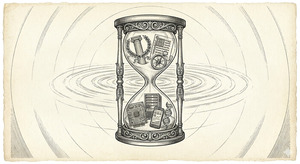
I want to tell you about the things that do not change. Because you live in a time when everything seems to move too quickly — artificial intelligence is learning to write poetry, robots are operating on human bodies, and machines are speaking to us in our own tongue. But beneath this restlessness, beneath the noise of progress, there is something that beats as steadily as your heart: the human condition defined by constants that cannot be modified by an UPDATE.
Death That Knocks with an Equal Foot
Horace, a Roman poet who lived two thousand years before us, wrote: 'Pallida mors aequo pulsat pede' — pale death knocks with an equal foot at the door of the hovel and at the gate of the palace. In his day, people died of plague and war. In our day, we have antibiotics and relative peace, but death still knocks. It knocks at the door of the poor man in the Rahova neighbourhood and at the gate of the billionaire in Primăverii.
I once saw, at the Floreasca Hospital, a young doctor walking out of an operating theatre. He was wiping away tears without caring who might see him. I was reminded of what Epictetus had said nineteen centuries earlier: 'It is not death that is to be feared, but the fear of death.' That doctor was not weeping because his patient had died — he was weeping because he had not managed to save him. The difference is small, but it matters.
You, who live in a world where iPhones are replaced annually and trends last a matter of days, must know this: the only absolute constant is that all things come to an end. The Greeks had a phrase for it — memento mori, remember that you will die. It was not a threat, dear reader. It was a call to life.



 is one of those domestic facts that most of us accept without question. The device isn't on, but it isn't dead either. It waits, drawing a trickle of current, ready to spring back to life the moment you press a button on the remote.