• +40720 576 837
  • info@cojocarupetru.info
  • Monday-Friday: 08-18
Întrebarea „cum să rămân relevant?" este sinceră - Petru Cojocaru Întrebarea „cum să rămân relevant?" este sinceră - Petru Cojocaru
  • Blogs
  • Română (România)
  • English (United Kingdom)

The question “how do I stay relevant?” is honest.

Featured

Digital Detox: What Happens in Your Mind When You Quit Social Media

Petru Cojocaru Social platforms 28 May 2026 Hits: 292 35 minutes read

In an age when checking one's phone has become an almost involuntary reflex, The wisdom of personal development writers and insights from specialist literature offer a broader perspective on this thoroughly modern challenge.a growing number of young people are beginning to ask themselves: what would it actually feel like to give up social media entirely? The phenomenon of the "digital detox" is no longer a passing trend — it has become a necessity recognised by specialists in mental health. Recent research offers fascinating perspectives on the psychological effects of this withdrawal, and the findings are not always what you might expect.
The wisdom found in personal development literature, alongside insights from specialist research, gives us a broader view of this thoroughly modern challenge. The key to success lies in a gradual approach: replacing online activity with offline alternatives, and building a genuine system of social support in the real world. For the generation that grew up in the digital age, this kind of detox does not mean rejecting technology — it means rediscovering the balance between the virtual world and the real one.

Reduction in anxiety and stress

The first and most thoroughly documented benefit of quitting social media is a dramatic reduction in anxiety. The study by Hunt and colleagues, published in The Lancet in 2019, demonstrated remarkable effects on the mental health of young people who limited their use of social networks.

  • A significant drop in anxiety: Restricting use to thirty minutes per day reduced anxiety levels among study participants by 25 per cent, according to the Lancet research.

  • A reduction in FOMO (fear of missing out): "The fear of missing something important diminishes considerably when you are no longer bombarded with constant updates from other people's lives," Hunt explains in the study.

  • Elimination of social comparison: Dr Patti Valkenburg observes in Current Directions in Psychological Science that "constant social comparison on online platforms is one of the principal causes of diminished self-esteem."

  • Stabilisation of mood: Research shows that the extreme mood fluctuations characteristic of heavy social media users tend to level out after withdrawal.


Read more: Digital Detox: What Happens in Your Mind When You Quit Social Media
Featured

Utopian Demands: What Users Want, What Technology Can Do, and What the Gap Between Them Reveals About Us

Petru Cojocaru AI - a tool 28 May 2026 Hits: 200 20 minutes read

There is a particular moment — I recognise it the instant it begins — when someone describes what they want from their website and I try not to blink. Not from professional coldness.Utopian Demands: What Users Want, What Technology Can Do, and What the Gap Between Them Reveals About Us I am not the sort who looks down at clients from behind a parapet of technical superiority, confusing that posture with actual competence. I try not to blink because something in me reaches instinctively towards the person sitting across from me, and that instinct insists on patience. Because the person is not lying. They are not exaggerating for effect. They are not attempting to deceive me or themselves. They simply believe. They believe, with a disarming sincerity, that somewhere in the vast universe of plugins and modules and extensions and Joomla versions, a solution already exists that does everything. A solution that thinks on their behalf, optimises without being asked, translates without misreading the nuance, protects without needing to be told why, sells without requiring the owner to understand the economics of selling. A solution that, if asked politely enough, would probably also make the coffee.

I have been working in web development for eight years. I have built websites for local councils and hospitals in Botoșani County, for schools only just discovering they needed an online presence, for private firms dreaming large on modest budgets, for entrepreneurs who confused enthusiasm with feasibility. I have seen requests of every conceivable variety. I have delivered projects I am proud of and a handful I would approach quite differently now. And throughout all of it, the most consistent thread running through the work has not been PHP, has not been PSR-4 architecture, has not even been Joomla in any of its versions. It has been the distance — sometimes enormous, always revealing — between what users believe technology can do and what it actually does.

I am writing this not to scold anyone. Not because users are less intelligent or less capable than those who build. I am writing it because I recognise myself in that same naivety whenever I wander into territory I have not properly studied. And because understanding this gap — with humility, without exasperation — is, in itself, the first movement towards genuine digital maturity.

Read more: Utopian Demands: What Users Want, What Technology Can Do, and What the Gap Between Them Reveals...
AI Is Not the Future. It Is the Present Waiting for You — Why We Abandoned Our Old Slogan
Featured

AI Is Not the Future. It Is the Present Waiting for You — Why We Abandoned Our Old Slogan

Petru Cojocaru Online promotion 28 May 2026 Hits: 174 17 minutes read

From digital presence to adaptive intelligence — a strategic decision built on seven years of data and a few sleepless nights


There is a moment in the life of every business owner — and, I believe, in the life of every person — when you realise that the instrument which built you has begun to constrain you. Not suddenly, not dramatically. But gradually, almost imperceptibly, like the wear on an engine that has run too many miles without a service. The engine still runs. But it no longer runs well.

Our slogan — "If you're not online, you don't exist" — was precisely that engine.

We launched it in 2017, when digitalisation for Romanian small businesses was still a matter of persuasion rather than survival. We carried it through the pandemic crisis, when it acquired a weight we had never anticipated. We used it in proposals, in presentations, in conversations with mayors from small counties who couldn't understand why a website should be anything more than a page displaying a telephone number and opening hours.

It worked. And that is precisely why we had to abandon it.

Read more: AI Is Not the Future. It Is the Present Waiting for You — Why We Abandoned Our Old Slogan
Featured

The Case For and Against Building a Personal Brand or Website

Petru Cojocaru Website creation 28 May 2026 Hits: 281 13 minutes read

In today's digital world — one of ceaseless innovation and shifting perspectives — building a personal brand or a website in your own name can be a powerful way to put your work, skills, and experience before the world.The Case For and Against Building a Personal Brand or Website Done well, it can help you establish a solid reputation, attract career opportunities, and forge meaningful connections within your industry. Yet the pitfalls are real, and they deserve honest consideration. This article examines both sides: the genuine advantages and the genuine risks of building a personal brand or a website that bears your name.

Expanding Your Network

Pro: One of the most compelling arguments for building a personal brand is the effect it can have on your network. Whether you are looking for a new role, running your own business, working on a side project, or still studying, the benefits of a strong professional network are plain to see. A wider network brings greater opportunities: new friendships, collaborators, business partners, potential employees, clients — contacts of every kind that you might otherwise never encounter. The growth potential is considerable, because a well-developed personal brand can open doors that would otherwise remain firmly shut.

Con: That said, managing a large network can become a burden in itself. Maintaining relationships, fielding messages, and responding to requests takes time and energy — more than many people anticipate. There is also the risk of drawing the attention of people who, for one reason or another, do not serve your interests or your brand well.

Dominant factor: Pro. The benefits of a strong network generally outweigh the downsides. The opportunities that come with broader connections — new contacts, new doors opened — tend to justify the effort of maintaining them.

Read more: The Case For and Against Building a Personal Brand or Website
Featured

Most Security Breaches Are Entirely Preventable — Brian Krebs

Petru Cojocaru Cybersecurity 28 May 2026 Hits: 660 42 minutes read

I often wonder how I would explain it to my son — barely into his teens now, hours spent staring at his phone — what is actually happening in the depths of the internet he takes to be a safe place.Most Security Breaches Are Entirely Preventable — Brian Krebs How do you tell a child that whilst he checks his messages or downloads his latest app, somewhere in the hidden corners of the network, people are turning technology into a weapon? I don't want to frighten him. But I can't leave him defenceless, either.

And so I began writing this piece, thinking of him, of his friends, of all the adolescents growing up inside a digital world they don't fully understand. The year 2025 has brought with it an explosion of digital fraud so sophisticated it could serve as the backdrop for a film in the vein of William Gibson's Neuromancer or Blade Runner — worlds where the boundary between the real and the virtual blurs until it disappears entirely.

The Global Landscape of Cybercrime in 2025

When I look at the figures in this year's security reports, I feel a weight settle in my chest. The median cost of a security incident has risen from $190,000 to nearly $3 million over the past fifteen years. It is as though we are watching the inflation of a nightmare — one that worsens not gradually but exponentially. The IRIS 2025 report shows that extreme security events have grown roughly fivefold in financial impact, and I find myself thinking about all those small businesses, those family enterprises, those ordinary people who lose the savings of a lifetime to attacks they cannot even begin to comprehend.

Distributed denial-of-service attacks have reached dimensions without precedent. The attack on KrebsOnSecurity, for instance, peaked at 6.3 terabits per second. Try to hold that number in your mind: it is like trying to drink from a fire hose whilst you are already drowning. The Aisuru botnet, which I shall come to shortly, represents a tenfold escalation over the Mirai attacks of 2016. It is the evolution of a virus that keeps growing resistant to treatment.

Read more: Most Security Breaches Are Entirely Preventable — Brian Krebs
Featured

Website Translation — A Critical Factor for Business

Petru Cojocaru Website creation 27 May 2026 Hits: 278 23 minutes read

When Your Business Speaks Only One Language. There is a scene I have witnessed enough times in my work to know it is not a coincidence, not an anomaly, not something that happens to other people's websites. Someone arrives on a page. They look at it — genuinely look, as people do when something catches their eye — and then they leave. Not because the product fails to interest them. Not because the price is unreasonable. They leave because they do not understand what they are reading. Or, more precisely, they leave because they have understood exactly one thing: that this page was not made for them.

Language is not merely a vehicle for information. At some deeper level, language is a form of recognition. When you address someone in their own tongue, you are telling them, before anything else: I know you are there. I anticipated you. I prepared something with you in mind. When you do not — and this is the part we most consistently overlook — you are not transmitting neutrality. You are transmitting exclusion.

A website available exclusively in Romanian is, from the perspective of a potential client in Germany, Italy, or Hungary, precisely what a website available exclusively in Finnish would be for you. You can sense that it sells something. You can see the photographs, note the telephone number, register that a human being exists somewhere behind the page. But you cannot buy. You cannot enquire. You cannot, in any meaningful sense, engage.

And yet the resistance to translation persists. I have heard it in dozens of conversations with owners of small and medium-sized businesses across north-eastern Romania. My clients are all from here. We don't export. We have no foreign partners. What would be the point? The answer to these questions is not simple, and I have no interest in pretending otherwise. But it exists, and it deserves to be set out carefully.

Read more: Website Translation — A Critical Factor for Business
18 Simple Ways to Maintain a Positive Attitude at Work
Featured

18 Simple Ways to Maintain a Positive Attitude at Work

Petru Cojocaru Personal development 27 May 2026 Hits: 193 21 minutes read

There is a persistent confusion — almost charming in its stubbornness — about what it actually means to have a positive attitude at work. Most people reduce it to a kind of social performance: the bright smile at the entrance on a grey Monday morning, the reflexive declaration that it's going to be a wonderful day, the performed enthusiasm in the team meeting that fools nobody, least of all yourself. And yet, if you look a little more carefully, you begin to see that this confusion — between authentic positivity and displayed positivity — is itself the source of a great deal of emotional exhaustion in the workplace.

A genuine positive attitude is not a mask you put on. It is something closer to an interior calibration — a way of regulating your relationship with uncertainty, with the minor failure on a Wednesday afternoon, with the colleague who manages to irritate you before 9 a.m., with the project that keeps refusing to behave. Contemporary psychology — and I mean here not the motivational literature that fills airport bookshops, but serious academic research — has arrived at several conclusions worth considering before constructing any list of practical advice.

Recent work within the PERMA+4 framework, developed from Seligman's (2011) foundational model and extended by Donaldson and Donaldson (2021), demonstrates that positive emotions are not merely the consequence of wellbeing but an active cause of it — they mediate the relationship between individual resources and professional satisfaction, functioning as an amplifier of everything else that is going well. In other words, you are not positive because things are going well; things go well also because you are positive. That distinction, quietly radical, changes rather a lot.

A substantial body of research has shown that a sustained positive outlook correlates with better psychological and physical wellbeing, and may even prolong life expectancy (Lyubomirsky, King & Diener, 2005). The person who has genuinely cultivated this orientation sees their life as a wide space full of possibility rather than a narrow corridor of closed doors. That vision, almost of its own accord, exposes them to new experiences, new competences, a different quality of daily presence.

When it comes to work specifically, your mental attitude shapes not only how others perceive you, but also your own professional satisfaction, your resilience in the face of obstruction, and the quality of what you actually produce. Given that many of us spend forty hours a week — sometimes considerably more — in the same physical or virtual space, alongside the same people, under the same pressures, cultivating a positive mental disposition is not a luxury or an affectation. It is a pragmatic necessity.

What follows are eighteen concrete ways of maintaining this attitude — not as surface technique, but as genuine interior practice, grounded in research and, in places, in the kind of honest reckoning that a list of this nature rarely allows itself.

Read more: 18 Simple Ways to Maintain a Positive Attitude at Work
Featured

What Is Artificial Intelligence? Definition and Core Principles

Petru Cojocaru AI - a tool 27 May 2026 Hits: 200 29 minutes read

There are moments when you realise the world you live in no longer resembles the one you grew up understanding. It isn't a dramatic shift — no announcement, no fanfare. What Is Artificial Intelligence? Definition and Core PrinciplesIt's slow, almost insidious: the kind you notice when your son stops looking for answers in books and turns instead to a dialogue box on a screen, and that dialogue box answers him more quickly, more articulately, than you ever could. That is artificial intelligence in our actual lives. Not an academic abstraction. A presence that has already set up its desk in the middle of our everyday existence — uninvited, unannounced, entirely at home.

What follows is my attempt to explain what this technology actually is. Not as a Stanford engineer might explain it, nor as a DeepMind researcher would. But as an ordinary person who has come to live alongside it, trying to understand what, exactly, he is cohabiting with.


What Is Artificial Intelligence, Really?

The European Union, through its 2024 Artificial Intelligence Act — the first major legal framework in the world dedicated to this technology — defines an AI system as "a machine-based system designed to operate with varying levels of autonomy, that may exhibit adaptiveness after deployment and that, for explicit or implicit objectives, infers, from the input it receives, how to generate outputs such as predictions, content, recommendations, or decisions that can influence physical or virtual environments."

It is a cold, juridical definition. Useful for legislators. For anyone who wants to understand the thing itself, I would put it more plainly: artificial intelligence is the capacity of a computing system to imitate human cognitive processes — to learn from experience, to recognise patterns, to make decisions, to generate content — without being explicitly programmed for every individual situation it might encounter.

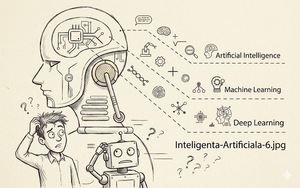
We are not talking about a single technology. We are talking about a vast field that encompasses machine learning, neural networks, natural language processing, computer vision, recommendation systems, and, more recently, generative models capable of producing text, images, music, or software code at a quality that, ten years ago, would have been unimaginable.

Read more: What Is Artificial Intelligence? Definition and Core Principles
Featured

The Story of the Institution That Collects Romania's Taxes

Petru Cojocaru Personal development 27 May 2026 Hits: 187 49 minutes read

There is an institution in Romania that almost every adult knows by name, yet few truly understand. It stands behind every receipt you receive in a shop, behind every salary your parents earn, behind every school and hospital that keeps the lights on in this country. We are talking about the National Agency for Fiscal Administration — ANAF.The Story of the Institution That Collects Romania's Taxes

When I was younger, my grandfather used to tell me about the days when taxes were paid at the counter, with banknotes counted out carefully, when tax officials would appear at your door clutching thick ledgers under their arms. Today, everything has changed beyond recognition. ANAF has evolved from a Soviet bureaucratic labyrinth into a modernised, computerised institution capable of tracking millions of transactions in real time. But this transformation did not happen overnight, and it certainly did not happen painlessly.

For a teenager, ANAF can seem like an abstract entity — something belonging to the adult world, tedious and remote. The reality, however, is that this institution determines how much money the state has to build new schools, to pay teachers, to maintain the roads you travel every day. It is a cog in a complex mechanism that, when it works well, allows all of us to live better lives. When it works badly, it can become a bureaucratic nightmare that stifles business and frustrates citizens.

This story deserves to be told, because sooner or later — when you get your first job, when you open your first business, or when you inherit something from your grandparents — you will have to deal with ANAF directly. Let us make sense of this institution together, its virtues and its failings alike.

Read more: The Story of the Institution That Collects Romania's Taxes
Featured

Google Analytics 4: A Complete Guide for Teenage Beginners

Petru Cojocaru Google 27 May 2026 Hits: 201 25 minutes read

I still remember the first time I opened the dashboard of a web analytics platform. It felt like stepping onto the bridge of a spacecraft — indicators blinking, graphs animating, figures that seemed written in a foreign tongue. From artificial intelligence and indexing to personalisation and behavioural signals. Discover how Google processes billions of daily searches and decides the order of results — explained accessibly for teenagers.Perhaps you felt something similar when you first heard about Google Analytics 4: that particular mixture of curiosity and overwhelm. And yet, beneath the apparent complexity of this platform lies something genuinely fascinating — the capacity to understand how real people interact with the digital world we are busy building.

Google Analytics 4 — GA4, as we shall call it throughout — is not merely a technical tool for marketing specialists. It is a window onto human behaviour in the online environment; a way of uncovering the stories concealed behind every click, every visit, every conversion. The transition from its predecessor, Universal Analytics, represents far more than a routine software update. It is a paradigm shift in how we understand and measure the digital experience.

For you — a teenager perhaps just beginning to explore the world of digital marketing, entrepreneurship, or the workings of the internet behind the scenes — this guide will serve as a companion for the journey. We shall not simply navigate buttons and settings; we shall discover together the logic behind these tools, the philosophy of measurement, and the importance of truly understanding your audience. Whether you dream of launching your own blog, building an online business, or simply making better sense of the technology that shapes your daily life, fluency in GA4 will offer you a precious vantage point over the digital landscape.

Read more: Google Analytics 4: A Complete Guide for Teenage Beginners
Featured

Between Toner and Algorithms: On the Survival of a Printer Business in the Paperless Age

Petru Cojocaru Advertorials 25 May 2026 Hits: 174 24 minutes read

An interview with Sebastian Anghel


The laser-printer depot of Erste Copia Center SRL,Between Toner and Algorithms: On the Survival of a Printer Business in the Paperless Age tucked along Strada Primăverii in Botoșani, bears no resemblance to the gleaming technological dreams of corporate advertising. There are no futuristic holograms here, no Samsung keynote imagery, no Scandinavian minimalism borrowed from a Google campus brochure. Instead, methodically arranged shelves hold rows of reconditioned machines — HP LaserJet 4000-series printers that have processed millions of pages in public administrations; robust Canons that survived the chaos of local newspaper offices; Xerox industrial workhorses bearing the scars of a thousand graphic design projects.

Note: This interview is an advertorial.

It is Thursday afternoon, the 13th of February 2025. Sebastian Anghel has just finished diagnosing an HP LaserJet Enterprise M507 brought in by a law firm from the town centre. The presenting complaint was simple — "colour printing has gone wrong" — but the investigation revealed something else entirely: a counterfeit magenta cartridge, purchased online at half the price of a genuine HP one, had damaged the imaging unit. Cost of repair: 800 lei. Price of the original cartridge that would have prevented the problem: 250 lei.

"This is my daily story," he says, holding up the dismantled cartridge. "People think they're saving money by buying cheap consumables from China. They don't realise that a counterfeit toner can destroy a three-thousand-euro printer. I don't just sell equipment. I sell education about the real long-term cost."

On his workbench, beside diagnostic instruments and unsealed test cartridges, sits a column of invoices — a service call for a rural municipality still running an HP LaserJet 4250 from 2005; the sale of a reconditioned printer to a cash-strapped school; an order for genuine consumables from a medical practice; a technical consultation for a print shop looking to modernise its equipment fleet.

In this apparently unremarkable scene, the paradox of an entire industry concentrates itself. For nearly twenty years, the prophets of digitalisation have been announcing the end of paper. The paperless office. Electronic invoicing. Cloud documents. Digital signatures. Blockchain contracts. And yet, in 2025, laser printers have not merely survived — they remain essential tools in the daily functioning of public institutions, law firms, medical practices, schools, and print shops.

Read more: Between Toner and Algorithms: On the Survival of a Printer Business in the Paperless Age
  1. When Google Takes the Tool from Your Hand — the Pattern Nobody Wants to Acknowledge
  2. Romanian Law Requires Public Institutions to Adopt Standardised Navigation Menus on Their Websites
  3. Dialogued Audio Summaries: A Strategic Response to the Fast-Consumption Behaviour of Digital Content
  4. I Received an Email Telling Me I Don't Exist. I Stopped to Think
  5. How to Appear in AI Responses — and Why Today's Advice May Be Worthless Tomorrow
  6. Oroftiana, the Spruce Forest — Waiting as a Form of Love
  7. Man has ceased to be necessary: ​​from the man who produces to the man who receives
  8. Comfort as Unwritten Rule
  9. Human Misalignment Mirrored in AI — Five Friends and a Question
  10. Small Businesses, Big Targets: How to Avoid Scams Targeting Small Businesses
  11. What AI Applications Do I Use
  12. Show Must Go On – The Architecture of Premeditated Baseness
  13. Clayton Christensen's Dream: Disruptive Innovation, as Economic Sharks Become Infrastructure
  14. What I'm Reading — Just Other People's Blogs? NO!
  15. Marketing Is Broken. Can MarTech Alone Fix It?
  16. The Robot Came Into the House. I Decided Whether to Let It Stay.
  17. Between Brass and Polyethylene: On Trading Instruments for an Invisible Craft
  18. I Do Not Applaud: "The Emperor Has No Clothes." A Portrait of the Uncomfortable Sceptic
  19. I Sent Thousands of Messages. I Never Once Asked Myself "To Whom?" or "In What Context?"
  20. Good Morning, How Are You? — Dropped Like a Stone into a Frozen Lake: The Unconvincing Message
  • 7
  • 8
  • 9
  • 10
  • 11
  • 12
  • 13
  • 14
  • 15
  • 16
Page 12 of 17
  1. You are here:  
  2. Home

Blog Categories

  • BROWSER≠intimacy (1)
  • Historical Similarities (16)
  • #AboutBotoshine (10)
  • Website creation (11)
  • Personal development (25)
  • AI - a tool (29)
  • Science and civilization (38)
  • Online promotion (14)
  • Cybersecurity (11)
  • SEO optimization (3)
  • Google (12)
  • Advertorials (5)
  • Social platforms (4)
Recently articles
  • The Monopoly at the Crossroads Was Unravelling. And as It Unravelled, the World Had Begun to Love It 17 October 2026
  • Who Follows Whom: Does Form Follow Function, or Function Form? 06 October 2026
  • Ten Just Men 27 September 2026
  • Seven Repairs 27 September 2026
  • The Gold in the Crack 27 September 2026
  • Laws Left by Our Ancestors "with a Dying Breath" — On the Web 24 September 2026
  • Have You Ever Seen a Well-Sweep: A Tall Post with a Long Pole Resting on It, Swaying Back and Forth? 23 September 2026
  • A Beautiful Image of Techno-Taming: The Wretched Nag from the Fairy Tale of Harap-Alb 23 September 2026
  • The Last Days of Social Media. 19 September 2026
  • Always Monitorable. Always. AI Governance Version 3 already exists. 15 September 2026
Today: 41
Yesterday: 91
This Week: 248
Last Week: 653
This Month: 3,116
Last Month: 1,531
© 2026 Absolut Web Expert SRL CUI 36246651 info()cojocarupetru.info Tel. 0741 439 060
| Jurnalism literar local augmentat cu AI |
  • BROWSER≠intimacy
  • #AboutBotoshine
  • Website creation
  • Personal development
  • AI - a tool
  • Science and civilization
  • Online promotion
  • Cybersecurity
  • SEO optimization
  • Google
  • Advertorials
  • Social platforms
  • Historical Similarities