• +40720 576 837
  • info@cojocarupetru.info
  • Monday-Friday: 08-18
Întrebarea „cum să rămân relevant?" este sinceră - Petru Cojocaru Întrebarea „cum să rămân relevant?" este sinceră - Petru Cojocaru
  • Blogs
  • Română (România)
  • English (United Kingdom)

The question “how do I stay relevant?” is honest.

Featured

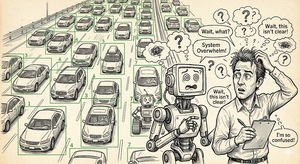
Half of the internet doesn't exist. The other half wonders who they're talking to.

Petru Cojocaru Cybersecurity 01 June 2026 Hits: 247 17 minutes read

The Silent Farm: Bots, Public Perception, and the Invisible BeneficiaryHalf of the internet doesn't exist. The other half wonders who they're talking to.


There is a moment when a number stops being a statistic and becomes a symptom. That moment, as far as the internet is concerned, has already passed. It passed without newspaper headlines, without political declarations, without any institutional response remotely proportional to its gravity.

In 2024, for the first time in a decade, automated traffic surpassed human activity online. More than half of everything circulating on the internet — 51 per cent, according to Imperva's annual Bad Bot Report — was produced by no human hand, observed by no human eye, driven by no human intention. It was produced by machines that imitate people. Machines that comment, distribute likes, create accounts, spread messages, simulate consensus, and construct — with the tireless patience of a mechanism that never sleeps — a parallel reality in which no one knows with any certainty who they are actually talking to.

This is not a metaphor. It is a cybersecurity report. And its implications extend far beyond the world of IT.


Before 51%: How We Got Here

The internet was not born with bots. It was born with people who dreamed of a global network of knowledge — a space where ideas might travel freely and conversation transcend borders. The first bots arrived quietly, in the shadow of that dream: simple programmes that indexed pages, dispatched automated notifications, responded to elementary commands.

They were tools. Neutral, in principle.

The transformation was gradual. Social media platforms came to understand that engagement — not truth, not the quality of conversation, but raw emotional reaction, any form of activity at all — was their currency of exchange. And once someone grasped that bots could generate engagement on an industrial scale, they became instruments of power.

By 2023, nearly half of all global internet traffic — 49.6 per cent, according to the same Imperva research — was already coming from automated sources. The highest level recorded since the company began monitoring the phenomenon a decade earlier. A year later, the 50 per cent threshold was crossed. This trend is neither accidental nor reversible through individual vigilance alone.
Read more: Half of the internet doesn't exist. The other half wonders who they're talking to.
Featured

Specific Indicators and Analytical Tools for AI-Generated Traffic

Petru Cojocaru AI - a tool 01 June 2026 Hits: 173 16 minutes read

Measuring What Can No Longer Be Seen — Metrics and Platforms for the Age of Synthesised SearchSpecific Indicators and Analytical Tools for AI-Generated Traffic


"The future belongs not to the most technical, but to the most human — to those who know how to use technology in order to amplify their humanity, not to replace it."


There is a moment in the history of any discipline when the old instruments can no longer measure a new reality — yet nobody wishes to be the first to say so aloud. It happened when television audiences met the internet. It happened when click-through rates on banner advertisements collapsed as people learned, almost unconsciously, to look straight through them. It is happening now with traditional analytics, confronted with traffic that artificial intelligence generates on its own terms.

This is not a catastrophe. It is a recalibration. But any honest recalibration demands that we acknowledge — openly, without the usual professional reluctance — that Google Analytics 4, an excellent and well-constructed instrument used by tens of millions of websites, was never designed for a world in which the answer to a user's question appears directly inside ChatGPT, without that user ever clicking on your link.

You might be cited ten times a day in the responses of an AI assistant. Your authority in your field might be growing organically, in real time, on a genuinely global scale. And GA4 would still display the same flat graph, unmoved and unremarkable. Not because the data is wrong — but because it is measuring something other than what is actually taking place.

This article is a map. Not a perfect one, nor a final one — the ecosystem moves far too quickly for that — but a useful one for anyone who manages a website and wants to understand which instruments they are working with, what those instruments actually measure, and what, in the end, slips silently through their fingers.

Read more: Specific Indicators and Analytical Tools for AI-Generated Traffic
Featured

What Ministerial Order MEC No. 3858 2026 Requires — and What Romanian Schools Can Actually Do

Petru Cojocaru Website creation 31 May 2026 Hits: 194 20 minutes read

There is a moment when a law becomes something more than a text published in the Official Gazette.What Ministerial Order MEC No. 3858/2026 Requires — and What Romanian Schools Can Actually Do It becomes a practical problem. It becomes a question posed to a headteacher who doesn't know where to begin, a teacher staring at an open Google Drive folder wondering whether what she's doing is even correct, an IT technician at a provincial secondary school who suddenly realises that setting up a server requires rather more than knowing the administrator password.

That moment arrived in May 2026.


What happened in May 2026 — and why it matters

Through Order No. 3,858/2026 of the Ministry of Education and Research, published in the Official Gazette of Romania, Part I, No. 392 of 8 May 2026, the Framework Methodology for the Development and Management of the Professional Portfolio of Teaching Staff was formally approved. This is not mere bureaucratic circularity. It represents a genuine shift in how the state understands the documentation, evaluation, and archiving of a teacher's career.

The provisions are clear in their consequences. Beginning with the 2026–2027 school year, every teacher will be required to maintain a comprehensive professional portfolio containing documents relating to professional activity, assessment, continuing development, and classroom work — including in digital form. That portfolio will carry weight at decisive stages of the career: the definitivat examination, the award of teaching grades, annual performance reviews, school inspections, staff mobility, and the granting of increments and prizes.

This is not, then, an optional tool — a folder a teacher might build when the mood takes her, or when the headteacher persists. It is compulsory. Schools have no more than sixty days from the date of publication of the order to produce their own internal procedure — the deadline falling on 6 July 2026 — a procedure to be brought to the attention of all teaching staff and published on the school's website.

The Ministry has announced its intention to create an integrated national platform. The Secretary of State enumerated modules for standardised assessment, financial management, records and electronic registers, together with a module for teacher portfolios and pupil portfolios, the platform's stated ambition being to reduce school bureaucracy. At the time the order was published, the project was still under evaluation at the Ministry of European Projects and Investment.

In other words: the promised national platform does not yet exist in operational form. Schools must manage now, with what they have.

This tension — between the Ministry's centralising ambition and the decentralised reality of several thousand educational institutions spread across Romania — is precisely the space in which open-source platforms become relevant.

Read more: What Ministerial Order MEC No. 3858 2026 Requires — and What Romanian Schools Can Actually Do
Featured

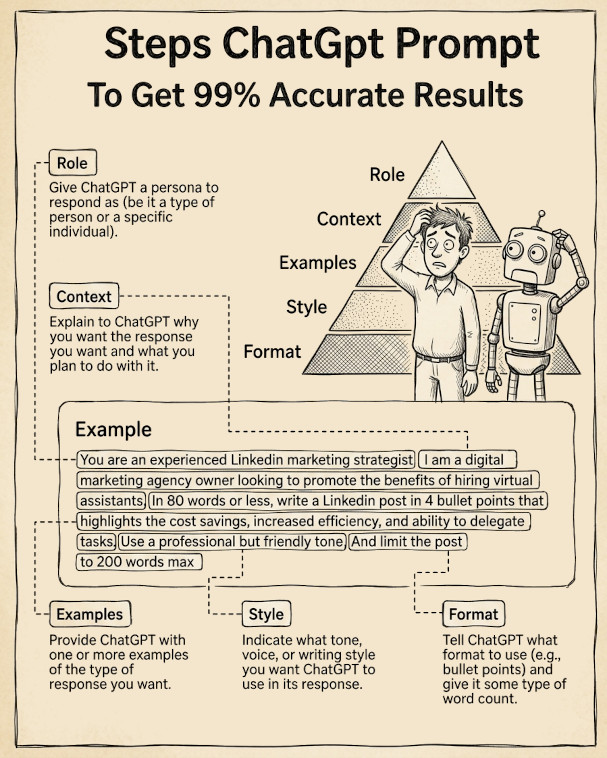
ChatGPT — The Recommended Prompt Model for Eloquent Responses

Petru Cojocaru AI - a tool 31 May 2026 Hits: 232 17 minutes read

A good tool does nothing on its own.

a href="/ro/component/content/article/chat-gpt-modelul-recomandat-de-cerere-prompt-pentru-a-obtine-raspunsuri-elocvente?catid=29:ai-o-unealta&Itemid=373" title="Chat GPT - modelul recomandat de cerere prompt pentru a obține răspunsuri elocvente">ChatGPT — The Recommended Prompt Model for Eloquent Responses

My father was a car mechanic. Not the kind who works in a dealership, armed with diagnostic software and touchscreen interfaces, but the kind who could read an engine by its sound — by the tremor he felt through the palm of his hand resting on the bonnet, by the smell of warm metal. I would sometimes watch him stop mid-task, in the middle of something entirely routine — tightening a bolt, cleaning a filter — and hold a spanner still for a moment longer than was strictly necessary, as if he were speaking to it. I was a child and thought it an odd habit. Now I understand it for what it was: a form of attention. A good tool does nothing on its own. The hand that holds it must know what it wants.

A sharp axe does not fell the forest by itself. In 2026, that expression is further nuanced by the question of human intent: the delegation of responsibility.

I thought of him for the first time when I realised that the poor responses I was getting from ChatGPT had nothing to do with the model's limitations. The problem was mine. I was asking badly.

ChatGPT represents a genuine shift in the way we interact with technology and access information. Its model allows users to formulate clear, detailed requests in order to receive precise, substantive responses. A well-structured prompt opens the door to nuanced, personalised explanations. The model's adaptability makes it effective across a wide range of questions and informational needs. Every interaction underscores the same truth: clarity and context are not optional extras — they are the work itself.

In the digital age, this instrument has become increasingly indispensable, precisely because of its precision. The recommended prompt model maximises the quality of dialogue and the accuracy of results. With it, communication becomes fluent and intuitive in a way that earlier tools rarely managed. This article explores how a well-considered prompt transforms the experience of using ChatGPT — and why that transformation matters for anyone who takes their work seriously.

"ChatGPT is an essential tool in the digital age, offering eloquent responses through a precise interpretation of well-formed requests." The quality of the interaction, it turns out, depends almost entirely on the quality of the question.

The model performs best when guided by clarity, specificity, and complete context. A structured prompt helps organise ideas and gives the model a coherent framework within which to operate. Worked examples and stated expectations shape the final output to match actual needs. A request to flag uncertainties reduces the risk of receiving confident-sounding misinformation. All of this points to the same conclusion: a well-constructed prompt is the key to a productive dialogue with advanced AI. This approach transforms the interaction into something genuinely iterative and adaptive — and that distinction, between mere use and real engagement, is what separates adequate results from excellent ones.

Read more: ChatGPT — The Recommended Prompt Model for Eloquent Responses
Featured

A Meditation on Technology, Expectations, and Reality in the Web Ecosystem

Petru Cojocaru Website creation 31 May 2026 Hits: 193 23 minutes read

There is, in the relationship between user and technology, a fundamental tension that deserves to be explored not merely in technical terms but as a broader cultural phenomenon — a tension between what we imagine might be possible and what is, in fact, achievable within the material and temporal constraints of our present technological moment.A Meditation on Technology, Expectations, and Reality in the Web Ecosystem

This gap is far more than a simple failure of communication, or a matter of insufficient technical literacy. It reveals something deeper about the way we understand and assimilate technological progress in contemporary culture.

Developers of components, plugins, and modules for Joomla — let us take this particular ecosystem as our vantage point, a microcosm of a much wider dynamic — find themselves in a paradoxical situation. Their users arrive with questions and requests that appear to have been shaped, in large part, by the vague, seductive, and often unsubstantiated promises of artificial general intelligence. This is a discrepancy not so much between technical competence and incompetence as between two fundamentally different ways of thinking about what digital technology actually is.


The Functional Utopia: The Case of the Omniscient Chatbot

Consider the first of these recurring expectations: the desire for a chatbot capable of answering "any question about the website." On the face of it, the request seems modest, even reasonable — after all, do we not speak daily with voice assistants, do we not receive instant answers to complex questions? But this apparent simplicity conceals layers of technological complexity worth unpacking carefully.

The user assumes, in a manner that is almost magical, that an AI chat module can substitute for human presence — that it can navigate the labyrinth of content, services, and functionality without prior training, without painstaking configuration. It is an expectation that reflects, in a certain sense, the central promise of contemporary AI: the elimination of friction between intention and execution, the disappearance of the intermediate effort.

But the technical reality — and here we arrive at the heart of the problem — is far more nuanced, far more capricious.

A functional AI chatbot does not emerge spontaneously from the installation of a plugin. It requires what developers call "vectorisation," "embeddings," "semantic mapping" — terms that, beneath the technical jargon, signify something fundamental: the transformation of human information, with all its ambiguities and nuances, into a form that algorithms can process.

Read more: A Meditation on Technology, Expectations, and Reality in the Web Ecosystem
Featured

AI Ethics Without Asimov: What Have We Built Instead?

Petru Cojocaru Science and civilization 30 May 2026 Hits: 259 45 minutes read

Rules written by people who are afraid of their own creation.


I sit in front of the screen and think about my father, who spent his days repairing engines and never once wondered whether an engine had rights. AI Ethics Without Asimov: What Have We Built Instead?It was a question that simply did not exist. The engine either worked or it didn't. If it didn't, you took it apart, found the faulty component, and replaced it. There were no ethics committees for carburettors. No parliamentarians debating whether a connecting rod was permitted to move in this direction or that. And yet here we are, in 2025, with systems that write poetry, diagnose cancers, and draft legal contracts — and with legislators who still ask, with a gravity that ought to concern us, whether AI is closer to a hammer or to an employee. My father knew something he never put into words, but lived out in every working day of his life: that

…a tool that exceeds the understanding of the person wielding it is no longer, in any meaningful sense, a tool. It is a silent partner, with its own quirks and limits — and if you don't respect those limits, they cost you.

He spoke of this in terms of wear and mechanical tolerances. I am trying to speak of the same thing in terms of trained values and corporate constitutions. The language has changed. The underlying problem — the relationship between a person and the tool that outgrows them — has not.

The lag between AI's actual capabilities and our institutional capacity to govern it is not accidental. It is structural. And someone ought to say so plainly, without euphemism.

Read more: AI Ethics Without Asimov: What Have We Built Instead?
Featured

Brand Advertorials with Augmented Journalism Techniques

Petru Cojocaru Online promotion 30 May 2026 Hits: 260 31 minutes read

There is a moment, every morning when I sit down at my desk before my son wakes, when I try to remember why I began writing advertorials.Brand Advertorials with Augmented Journalism Techniques Not in any grand sense — not searching for a founding mission or a manifesto — but in the most practical sense: what persuaded me, the very first time, that a text someone has paid for can nonetheless be honest. That there exists a path between advertising that lies with flair and silence that helps no one.

The coffee sits on the desk. Outside, it is that particular grey morning Botoșani does so well, when the light has not yet decided whether it is arriving or not. Gri — the cat, not the light — is asleep on the chair. And I sit with my hands on the keyboard, thinking about my father.

He was a mechanic all his life. I am not speaking figuratively, not constructing a metaphor. I am speaking about a man who lived with his hands inside engines, who could tell by the sound alone whether the bearing had gone on the right side or the left, who could diagnose a car by listening to it start from cold — the way a doctor listens to a heart without an ultrasound, using nothing but a stethoscope and years of accumulated silence under vehicles, in the cold, hands cracked with grease and frost. He never had a website. It would never have occurred to him that he might need one. And yet he was one of the finest craftsmen in his trade that I have ever known.

He died invisible, in the technical sense of the word. His network of clients — built over twenty years by word of mouth, by recommendations passed from one person to the next, by the neighbour who mentioned him to another who mentioned him to another still — died with him. He left behind no digital trace, no archive of credibility, no written story that might outlive his physical presence.

I think about this when I write an advertorial. I think about how somewhere there is a man who knows how to do something exceptional — to weld waterproofing membranes at precise temperatures, to build a house perfectly level, to calibrate an industrial printer, to make bespoke furniture that fits exactly into two metres eighty-six of a real wall, not the ideal wall in a catalogue — and that man does not know how to tell his own story. Not from any lack of intelligence. But because self-narration is a separate trade entirely, one you do not learn in the same workshop where you learn to hold a spirit level.

This is, in the end, why I write advertorials. Not because I like advertising. But because I like giving voice to the invisible craftsman.


An Advertorial Is Not Advertising Dressed in Journalistic Clothing

I need to say this plainly, because otherwise everything that follows becomes a list of rhetorical techniques without moral foundation: an advertorial written with journalistic methods is not disguised publicity. It is a distinct genre, with its own ethical obligations, its own lines you are not permitted to cross.

Read more: Brand Advertorials with Augmented Journalism Techniques
Featured

Bespoke Furniture in Botoșani: What Nineteen Years with a Local Maker Teaches You

Petru Cojocaru Advertorials 30 May 2026 Hits: 166 30 minutes read

It was a Friday afternoon in October when Andreea — a schoolteacher in Botoșani, mother of a sixteen-year-old boy — walked into the showroom on George Enescu Street for the first time. She had been putting the visit off for three years.Bespoke Furniture in Botoșani: What Nineteen Years with a Local Maker Teaches You

Her son's bedroom still looked as it had when he was in primary school: the same white wardrobe covered in football stickers, the same shelf bowing under the weight of secondary-school textbooks, the same desk that had been perfectly sized for a ten-year-old and was now absurdly small for an adolescent writing eight-page essays. The problem wasn't aesthetic. It was practical. Her son was draping his jacket over the chair each evening because there was simply no room left in the wardrobe, and three times a week he asked her where his maths books had got to.

Andreea had a rough idea of what she needed. What she didn't know was whether it was possible on the budget she'd set aside: 3,400 lei, a wall measuring two metres eighty-six, and a window positioned precisely where a wardrobe would have fitted best. She'd browsed online, seen the prices, quietly closed the laptop. Several colleagues had mentioned Dryve Com — not because they'd seen an advert, but because they had furniture from the workshop and it had held up.

That Friday ended with a sketch on paper, a wardrobe designed to the exact dimensions of her actual wall, a quote beneath the figure she'd had in her head, and a three-week lead time. Twenty-one days later, her son could finally hang his jacket in a wardrobe.

Andreea's story is not exceptional. It is typical of the Dryve Com client. And understanding it explains more about why this company has survived nineteen years than any corporate presentation could.


This is a sponsored advertorial. The content was produced in partnership with Dryve Com SRL, a bespoke furniture manufacturer based in Botoșani (super-mobilier.ro). All factual claims have been verified with a company representative. Editorial opinions are the author's own.


2006: Five Men, a Panel Saw, and a Market That Didn't March in Formation

September 2006. Romania was building at a pace that few people now remember accurately. Apartment blocks rising in the outer districts, houses thrown up hastily at the edge of town, families renovating homes they'd waited years to own. Bespoke furniture was becoming, for the first time, a realistic aspiration for the provincial middle classes.

Into this climate, Daniel Albotă and four associates registered Dryve Com SRL in Botoșani. It was not a hands-off investment. All five were simultaneously shareholders and workers — cutting panels in the morning, applying ABS edge banding in the afternoon, delivering and fitting in the evening. Nobody co-ordinated from a distance. Nobody delegated.

But the market didn't respond with the regularity they had hoped for. It arrived in uneven waves: a few good weeks, then a fortnight of silence, then a large order that created the illusion of stability, then silence again. The first year closed at the edge of viability. Not collapse — but not growth either. Bills paid, wages honoured, a bank balance that left no room for error.

"You paid what needed to be paid and kept something back for next month. That was it," says Daniel Albotă today, with the unhurried calm of someone who has long since left the need to dramatise behind him.

At home, his wife was counting too. A young child, a monthly bank repayment, a refrigerator whose contents varied in direct proportion to what had happened in the workshop that week. It is not the romantic image of entrepreneurship you find in conference presentations. It is the real one — with all its daily discomforts intact.

Read more: Bespoke Furniture in Botoșani: What Nineteen Years with a Local Maker Teaches You
Featured

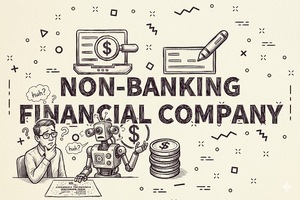
An Evolution of Local Non-Bank Financial Institutions

Petru Cojocaru Personal development 29 May 2026 Hits: 207 86 minutes read

From moneylenders to mobile apps: How the institutions that lend us money without being banks have transformed themselves

An investigation into a century of credit, swindles, and financial hopes.


Introduction: When money doesn't come from the bank. An Evolution of Local Non-Bank Financial InstitutionsImagine you urgently need money to buy a computer for school, but your parents cannot get a bank loan because they lack the right paperwork, or their income isn't considered sufficient. You might turn to a quick-loan company, to a leasing firm that hands you the product today and lets you pay in instalments, or even to a mobile app that transfers money to your account within minutes. All of these are non-bank financial institutions — companies that deal in money without being banks in the traditional sense. They fill the gaps left by the conventional banking system, reaching places where banks will not or cannot go.

These non-bank financial institutions, known in Romanian as IFNs, have become an integral part of the country's economic life. From the large leasing companies that help businesses acquire machinery, to the rapid-loan apps that promise money in your account within ten minutes, the diversity of this sector is remarkable. They manage investment funds through which ordinary people set aside modest savings for retirement, offer insurance for cars and homes, and provide financing for small businesses that would otherwise have nowhere to turn for capital. In Romania in 2024, these institutions administer tens of billions of euros and serve millions of clients — from individuals on ordinary incomes to multinational corporations.

The road these institutions have travelled across the Romanian landscape has been a winding one, marked by moments of genuine hope and bitter disappointment, by brilliant innovations and shameful swindles. From the first loan houses of the Kingdom, through the communist wasteland when the state controlled everything, to the chaos of transition when people lost their life savings in pyramid schemes, and on to the present day when digital technology is rewriting all the rules — each phase has its own dramatic stories. This analysis reveals not merely the technical evolution of the sector, but the human dramas played out in its corridors: people stripped of everything they owned, families rescued by a loan granted at precisely the right moment, fraudsters who cheated thousands of trusting souls, and digital revolutionaries building the future of finance.

Read more: An Evolution of Local Non-Bank Financial Institutions
Featured

A good question is already half the answer: on writing for a mind that forgets nothing but does not know how to ask

Petru Cojocaru Website creation 29 May 2026 Hits: 173 23 minutes read

 My father never asked questions. He simply fixed things. A good question is already half the answer: on writing for a mind that forgets nothing but does not know how to askI can still see him, bent over an engine with his head all but buried in the innards of a Dacia 1300, both arms blackened to the elbow, listening. He never asked the customer anything. He never said "describe the sound to me" or "when exactly does the problem occur?" He listened to the engine directly, laid his palm flat against the block as though taking someone's pulse, and within a few minutes he knew. He diagnosed without questionnaires, without forms, without protocol. His knowledge was tactile — accumulated across years of mistakes and corrections — and it operated through resonance rather than interrogation.

I inherited from him a fascination with mechanisms. What I did not inherit was that gift for direct listening. I write. I formulate. I build questions and rebuild them whenever the answer that comes back is wrong — which means the question was not properly put to begin with.

And it was precisely that thought which came to me one evening and refused to leave: artificial intelligence works in the opposite direction to my father. It needs you to formulate correctly. If the question is vague, the answer is vague. If the question is formal, the answer is formal. If the question resembles the language of an official who has copied from another form that was itself copied from a third, the answer will read like a planning notice from 2004.

And yet — people do not ask good questions. Not because they are incapable, but because they do not know how to translate anxiety into clear prose. When someone types "can I get the increased child benefit?", they are not conducting a legal enquiry. They are making a survival gesture. They are looking for confirmation. They want to hear: yes, you can.

The FAQ — the Frequently Asked Questions section of a website — ought to be the place where that translation happens. In reality, it is, more often than not, the place where official language finds its most comfortable and least scrutinised refuge.

Read more: A good question is already half the answer: on writing for a mind that forgets nothing but does...
Featured

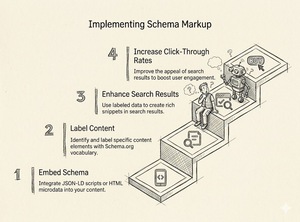
Structuring Content for AI Understanding: Schema Markup and Structured Data

Petru Cojocaru Website creation 29 May 2026 Hits: 224 21 minutes read

On the importance of semantic markup and metadata for the correct interpretation of your content — a practitioner's view, without technocratic illusions.


Why AI Does Not "Read" the Way You Do.Structuring Content for AI Understanding: Schema Markup and Structured Data There is a comfortable illusion that lives inside most people who publish on the web: that a well-written text will, by the force of its own clarity, be understood. That if you say something true and say it plainly, the world — including the world of machines — will grasp it. I lived inside that illusion for a while myself, writing, publishing, waiting. Until I understood that machines do not read. They process.

The difference is larger than it appears. When you read, you bring context, memory, emotion, inference. You know that a reference to a local council means a public institution, that "opening hours" refers to when someone will actually answer the telephone, that the author of the text is a person with a name and a history, not an abstract generating function. An AI system, if it is not told explicitly, guesses. Sometimes it guesses well. Sometimes it transforms you into something you are not.

Unstructured data — plain text, images, video — is accessible to people but disorderly for machines. AI models need labelled, structured data in order to analyse, categorise, and deploy information in their responses. Without that labelling, your content exists in automatic translation — and the translation may be wrong in ways you will never see.

Schema markup is the answer to this problem. Not an SEO trick, not a technical hack to be applied on a rainy afternoon. It is the language through which you tell the machine: this is an organisation. This is the author. This is a question and this is its answer. It is, if you want a more human metaphor, the difference between introducing your father to someone who has never met him — "this is my father, a mechanic, a man of concrete things" — and leaving him to be interpreted by whoever happens to be looking.

My father was a mechanic. He repaired engines for a living. Whenever someone brought him a car he did not know, he would open the bonnet and ask, before touching anything: do you have the paperwork? Not out of bureaucratic habit — because the paperwork told him what the engine had been through, what had already been changed, who had worked on it before. Without documentation, he was guessing from cold. With documentation, he was working with knowledge.

Schema markup is the documentation of your website. It does not make your content better than it already is. But it makes everything that is good in it legible to a machine that would otherwise be guessing from cold.

Read more: Structuring Content for AI Understanding: Schema Markup and Structured Data
  1. Digital Detox: What Happens in Your Mind When You Quit Social Media
  2. Utopian Demands: What Users Want, What Technology Can Do, and What the Gap Between Them Reveals About Us
  3. AI Is Not the Future. It Is the Present Waiting for You — Why We Abandoned Our Old Slogan
  4. The Case For and Against Building a Personal Brand or Website
  5. Most Security Breaches Are Entirely Preventable — Brian Krebs
  6. Website Translation — A Critical Factor for Business
  7. 18 Simple Ways to Maintain a Positive Attitude at Work
  8. What Is Artificial Intelligence? Definition and Core Principles
  9. The Story of the Institution That Collects Romania's Taxes
  10. Google Analytics 4: A Complete Guide for Teenage Beginners
  11. Between Toner and Algorithms: On the Survival of a Printer Business in the Paperless Age
  12. When Google Takes the Tool from Your Hand — the Pattern Nobody Wants to Acknowledge
  13. Romanian Law Requires Public Institutions to Adopt Standardised Navigation Menus on Their Websites
  14. Dialogued Audio Summaries: A Strategic Response to the Fast-Consumption Behaviour of Digital Content
  15. I Received an Email Telling Me I Don't Exist. I Stopped to Think
  16. How to Appear in AI Responses — and Why Today's Advice May Be Worthless Tomorrow
  17. Oroftiana, the Spruce Forest — Waiting as a Form of Love
  18. Man has ceased to be necessary: ​​from the man who produces to the man who receives
  19. Comfort as Unwritten Rule
  20. Human Misalignment Mirrored in AI — Five Friends and a Question
  • 6
  • 7
  • 8
  • 9
  • 10
  • 11
  • 12
  • 13
  • 14
  • 15
Page 11 of 17
  1. You are here:  
  2. Home

Blog Categories

  • BROWSER≠intimacy (1)
  • Historical Similarities (16)
  • #AboutBotoshine (10)
  • Website creation (11)
  • Personal development (25)
  • AI - a tool (29)
  • Science and civilization (38)
  • Online promotion (14)
  • Cybersecurity (11)
  • SEO optimization (3)
  • Google (12)
  • Advertorials (5)
  • Social platforms (4)
Recently articles
  • The Monopoly at the Crossroads Was Unravelling. And as It Unravelled, the World Had Begun to Love It 17 October 2026
  • Who Follows Whom: Does Form Follow Function, or Function Form? 06 October 2026
  • Ten Just Men 27 September 2026
  • Seven Repairs 27 September 2026
  • The Gold in the Crack 27 September 2026
  • Laws Left by Our Ancestors "with a Dying Breath" — On the Web 24 September 2026
  • Have You Ever Seen a Well-Sweep: A Tall Post with a Long Pole Resting on It, Swaying Back and Forth? 23 September 2026
  • A Beautiful Image of Techno-Taming: The Wretched Nag from the Fairy Tale of Harap-Alb 23 September 2026
  • The Last Days of Social Media. 19 September 2026
  • Always Monitorable. Always. AI Governance Version 3 already exists. 15 September 2026
Today: 41
Yesterday: 91
This Week: 248
Last Week: 653
This Month: 3,116
Last Month: 1,531
© 2026 Absolut Web Expert SRL CUI 36246651 info()cojocarupetru.info Tel. 0741 439 060
| Jurnalism literar local augmentat cu AI |
  • BROWSER≠intimacy
  • #AboutBotoshine
  • Website creation
  • Personal development
  • AI - a tool
  • Science and civilization
  • Online promotion
  • Cybersecurity
  • SEO optimization
  • Google
  • Advertorials
  • Social platforms
  • Historical Similarities